 ROS Index
Repository Summary
| Checkout URI | https://github.com/MOLAorg/mola.git |
| VCS Type | git |
| VCS Version | develop |
| Last Updated | 2026-09-29 |
| Dev Status | DEVELOPED |
| Released | RELEASED |
| Contributing |
Help Wanted (-)
Good First Issues (-) Pull Requests to Review (-) |
Packages
| Name | Version |
|---|---|
| mola | 3.3.0 |
| mola_bridge_ros2 | 3.3.0 |
| mola_demos | 3.3.0 |
| mola_input_lidar_bin_dataset | 3.3.0 |
| mola_input_rawlog | 3.3.0 |
| mola_input_rosbag2 | 3.3.0 |
| mola_input_video | 3.3.0 |
| mola_kernel | 3.3.0 |
| mola_launcher | 3.3.0 |
| mola_metric_maps | 3.3.0 |
| mola_msgs | 3.3.0 |
| mola_pose_list | 3.3.0 |
| mola_relocalization | 3.3.0 |
| mola_traj_tools | 3.3.0 |
| mola_viz | 3.3.0 |
| mola_viz_imgui | 3.3.0 |
| mola_yaml | 3.3.0 |
README
:robot: MOLA :compass:
Modular Optimization framework for Localization and mApping



A modern, modular C++ and ROS 2 framework for Localization and SLAM. Configurable pipelines for LiDAR Odometry, LIO, and more.
Why MOLA | Solutions | Plans & Pricing | Documentation
| Distro | Build dev | Release |
|---|---|---|
| ROS 2 Humble (u22.04) |  |
|
| ROS 2 Jazzy (u24.04) |  |
|
| ROS 2 Kilted (u24.04) |  |
|
| ROS 2 Lyrical (u26.04) |  |
|
| ROS 2 Rolling (u26.04) |  |
| EOL Distro | Last Release |
|---|---|
| ROS 2 Iron (u22.04) |  |
🤖 What is MOLA?
MOLA (Modular Optimization framework for Localization and mApping) is a modular, extensible, and high-performance framework for robotics localization and 🗺️ mapping.
This repository contains the base open-sourced packages for the MOLA project. Other packages exist under the MOLAorg organization.
Refer to the official documentation for build instructions, demos, API reference, etc.
🗺️ Features
- 📍 LiDAR Odometry (LO), LiDAR-Inertial Odometry (LIO), geo-referenced maps, sensor fusion
- 🧩 Fully configurable YAML pipelines - no recompilation needed to change sensors, filters, or map layers
- 🎯 Flexible accuracy: fast real-time navigation or survey-grade (<1 cm) mapping
- 🌍 Map-less RTK-quality outdoor georeferencing with low-cost GNSS + LiDAR + IMU
- 🛠️ Rich
.mmmetric map ecosystem: viewer, LAS/PLY/TXT export, filtering, georeferencing tools - 🤖 ROS 2 ready (Humble, Jazzy, Kilted, Rolling) but also usable from standalone pure C++
🚀 Demo videos
Lidar-Inertial-Odometry (LIO) demo with Oxford Spires:
Lidar-Odometry (LO) demo with GrandTour legged dataset:
Lidar-Odometry (LO) demo with KITTI:
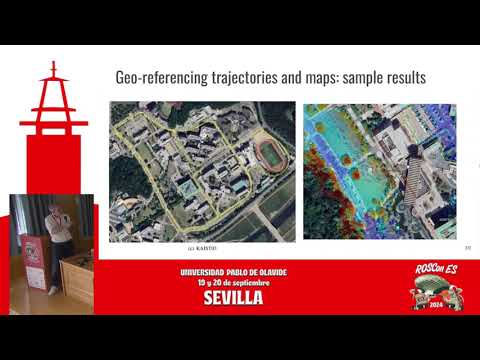
ROSCon Talk introducing MOLA
Video (Slides):
Individual package build status
Binary package build status per package and ROS 2 distro:
| Package | ROS 2 Humble (u22.04) |
ROS 2 Jazzy (u24.04) |
ROS 2 Kilted (u24.04) |
ROS 2 Lyrical (u26.04) |
ROS 2 Rolling (u26.04) |
|---|---|---|---|---|---|
| mola |
|
|
|
|
|
| mola_bridge_ros2 |
|
|
|
|
|
| mola_demos |
|
|
|
|
|
| mola_input_lidar_bin_dataset |
|
|
|
|
|
| mola_input_rawlog |
|
|
|
|
|
| mola_input_rosbag2 |
|
|
|
|
|
File truncated at 100 lines see the full file
CONTRIBUTING
Contributing to MOLA
Thank you for your interest in contributing to MOLA. This document outlines the process and expectations for contributing to this project. Please read it carefully before submitting any contribution.
MOLA is a modular SLAM and localization framework written in C++ with ROS 2 support. We welcome contributions from the community, provided they meet the quality and legal requirements described below.
Table of Contents
- Contributor License Agreement
- Code of Conduct
- Types of Contributions
- Getting Started
- Development Workflow
- Commit and Pull Request Guidelines
- Coding Standards
- Testing Requirements
- Documentation
- Review Process
- Reporting Issues
1. Contributor License Agreement
All contributions to MOLA require acceptance of the Contributor License Agreement (CLA) prior to being merged.
MOLA is distributed under a dual licensing model:
- Open source: GNU General Public License v3 (GPL v3)
- Commercial: A separate commercial license is available for industry users who cannot comply with the terms of the GPL v3
The CLA ensures that the project maintainers hold the necessary rights to distribute your contribution under both licensing models. It does not transfer copyright ownership — you retain full ownership of your work.
When you open a Pull Request, an automated CLA assistant will verify whether you have previously accepted the agreement. If you have not, you will be prompted to do so before the PR can be reviewed or merged. Contributions submitted without CLA acceptance will not be considered.
2. Code of Conduct
All contributors are expected to adhere to the project’s Code of Conduct. We are committed to maintaining a welcoming and professional environment for everyone, regardless of background or experience level. Violations may result in removal from the project.
3. Types of Contributions
We welcome the following types of contributions:
- Bug fixes — corrections to incorrect or unexpected behavior
- Performance improvements — optimizations with measurable, documented impact
- New modules or algorithms — extensions to MOLA’s modular architecture
- Documentation improvements — corrections, clarifications, and additions to existing documentation
- Dataset integrations — support for additional SLAM benchmark or real-world datasets
- ROS 2 integrations — improvements to the ROS 2 interface, launch files, or message definitions
- Tests — new or improved unit, integration, or regression tests
If you are considering a large or architectural contribution, please open an issue for discussion before beginning work. This avoids duplication of effort and ensures alignment with the project roadmap.
4. Getting Started
Full setup instructions, dependencies, and build guides are available in the official documentation:
https://docs.mola-slam.org/
Ensure your development environment is fully configured and that all existing tests pass before making any changes.
5. Development Workflow
-
Fork the repository and create a new branch from
main(or the relevant base branch). - Name your branch descriptively, e.g.
fix/imu-integration-driftorfeat/lidar-odometry-module. - Make your changes in focused, logically grouped commits.
- Ensure all tests pass locally before opening a Pull Request.
- Open a Pull Request against the
mainbranch with a clear description of your changes.
Do not submit Pull Requests that bundle unrelated changes. Each PR should address a single concern.
6. Commit and Pull Request Guidelines
Commits
- Write commit messages in the imperative mood:
Fix timestamp alignment in IMU handler, notFixedorFixes. - Keep the subject line under 72 characters.
- Reference relevant issues in the commit body where applicable, e.g.
Closes #123.
Pull Requests
- Provide a clear summary of the problem being solved and the approach taken.
- Include references to any related issues, discussions, or prior art.
- If the PR introduces a user-visible change, update the relevant documentation and changelog.
- Mark the PR as a draft if it is not yet ready for review.
File truncated at 100 lines see the full file
Repository Summary
| Checkout URI | https://github.com/MOLAorg/mola.git |
| VCS Type | git |
| VCS Version | develop |
| Last Updated | 2026-09-29 |
| Dev Status | DEVELOPED |
| Released | RELEASED |
| Contributing |
Help Wanted (-)
Good First Issues (-) Pull Requests to Review (-) |
Packages
| Name | Version |
|---|---|
| mola | 3.3.0 |
| mola_bridge_ros2 | 3.3.0 |
| mola_demos | 3.3.0 |
| mola_input_lidar_bin_dataset | 3.3.0 |
| mola_input_rawlog | 3.3.0 |
| mola_input_rosbag2 | 3.3.0 |
| mola_input_video | 3.3.0 |
| mola_kernel | 3.3.0 |
| mola_launcher | 3.3.0 |
| mola_metric_maps | 3.3.0 |
| mola_msgs | 3.3.0 |
| mola_pose_list | 3.3.0 |
| mola_relocalization | 3.3.0 |
| mola_traj_tools | 3.3.0 |
| mola_viz | 3.3.0 |
| mola_viz_imgui | 3.3.0 |
| mola_yaml | 3.3.0 |
README
:robot: MOLA :compass:
Modular Optimization framework for Localization and mApping
A modern, modular C++ and ROS 2 framework for Localization and SLAM. Configurable pipelines for LiDAR Odometry, LIO, and more.
Why MOLA | Solutions | Plans & Pricing | Documentation
| Distro | Build dev | Release |
|---|---|---|
| ROS 2 Humble (u22.04) | |
|
| ROS 2 Jazzy (u24.04) | |
|
| ROS 2 Kilted (u24.04) | |
|
| ROS 2 Lyrical (u26.04) | |
|
| ROS 2 Rolling (u26.04) | |
| EOL Distro | Last Release |
|---|---|
| ROS 2 Iron (u22.04) | |
🤖 What is MOLA?
MOLA (Modular Optimization framework for Localization and mApping) is a modular, extensible, and high-performance framework for robotics localization and 🗺️ mapping.
This repository contains the base open-sourced packages for the MOLA project. Other packages exist under the MOLAorg organization.
Refer to the official documentation for build instructions, demos, API reference, etc.
🗺️ Features
- 📍 LiDAR Odometry (LO), LiDAR-Inertial Odometry (LIO), geo-referenced maps, sensor fusion
- 🧩 Fully configurable YAML pipelines - no recompilation needed to change sensors, filters, or map layers
- 🎯 Flexible accuracy: fast real-time navigation or survey-grade (<1 cm) mapping
- 🌍 Map-less RTK-quality outdoor georeferencing with low-cost GNSS + LiDAR + IMU
- 🛠️ Rich
.mmmetric map ecosystem: viewer, LAS/PLY/TXT export, filtering, georeferencing tools - 🤖 ROS 2 ready (Humble, Jazzy, Kilted, Rolling) but also usable from standalone pure C++
🚀 Demo videos
Lidar-Inertial-Odometry (LIO) demo with Oxford Spires:
Lidar-Odometry (LO) demo with GrandTour legged dataset:
Lidar-Odometry (LO) demo with KITTI:
ROSCon Talk introducing MOLA
Video (Slides):
Individual package build status
Binary package build status per package and ROS 2 distro:
| Package | ROS 2 Humble (u22.04) |
ROS 2 Jazzy (u24.04) |
ROS 2 Kilted (u24.04) |
ROS 2 Lyrical (u26.04) |
ROS 2 Rolling (u26.04) |
|---|---|---|---|---|---|
| mola |
|
|
|
|
|
| mola_bridge_ros2 |
|
|
|
|
|
| mola_demos |
|
|
|
|
|
| mola_input_lidar_bin_dataset |
|
|
|
|
|
| mola_input_rawlog |
|
|
|
|
|
| mola_input_rosbag2 |
|
|
|
|
|
File truncated at 100 lines see the full file
CONTRIBUTING
Contributing to MOLA
Thank you for your interest in contributing to MOLA. This document outlines the process and expectations for contributing to this project. Please read it carefully before submitting any contribution.
MOLA is a modular SLAM and localization framework written in C++ with ROS 2 support. We welcome contributions from the community, provided they meet the quality and legal requirements described below.
Table of Contents
- Contributor License Agreement
- Code of Conduct
- Types of Contributions
- Getting Started
- Development Workflow
- Commit and Pull Request Guidelines
- Coding Standards
- Testing Requirements
- Documentation
- Review Process
- Reporting Issues
1. Contributor License Agreement
All contributions to MOLA require acceptance of the Contributor License Agreement (CLA) prior to being merged.
MOLA is distributed under a dual licensing model:
- Open source: GNU General Public License v3 (GPL v3)
- Commercial: A separate commercial license is available for industry users who cannot comply with the terms of the GPL v3
The CLA ensures that the project maintainers hold the necessary rights to distribute your contribution under both licensing models. It does not transfer copyright ownership — you retain full ownership of your work.
When you open a Pull Request, an automated CLA assistant will verify whether you have previously accepted the agreement. If you have not, you will be prompted to do so before the PR can be reviewed or merged. Contributions submitted without CLA acceptance will not be considered.
2. Code of Conduct
All contributors are expected to adhere to the project’s Code of Conduct. We are committed to maintaining a welcoming and professional environment for everyone, regardless of background or experience level. Violations may result in removal from the project.
3. Types of Contributions
We welcome the following types of contributions:
- Bug fixes — corrections to incorrect or unexpected behavior
- Performance improvements — optimizations with measurable, documented impact
- New modules or algorithms — extensions to MOLA’s modular architecture
- Documentation improvements — corrections, clarifications, and additions to existing documentation
- Dataset integrations — support for additional SLAM benchmark or real-world datasets
- ROS 2 integrations — improvements to the ROS 2 interface, launch files, or message definitions
- Tests — new or improved unit, integration, or regression tests
If you are considering a large or architectural contribution, please open an issue for discussion before beginning work. This avoids duplication of effort and ensures alignment with the project roadmap.
4. Getting Started
Full setup instructions, dependencies, and build guides are available in the official documentation:
https://docs.mola-slam.org/
Ensure your development environment is fully configured and that all existing tests pass before making any changes.
5. Development Workflow
-
Fork the repository and create a new branch from
main(or the relevant base branch). - Name your branch descriptively, e.g.
fix/imu-integration-driftorfeat/lidar-odometry-module. - Make your changes in focused, logically grouped commits.
- Ensure all tests pass locally before opening a Pull Request.
- Open a Pull Request against the
mainbranch with a clear description of your changes.
Do not submit Pull Requests that bundle unrelated changes. Each PR should address a single concern.
6. Commit and Pull Request Guidelines
Commits
- Write commit messages in the imperative mood:
Fix timestamp alignment in IMU handler, notFixedorFixes. - Keep the subject line under 72 characters.
- Reference relevant issues in the commit body where applicable, e.g.
Closes #123.
Pull Requests
- Provide a clear summary of the problem being solved and the approach taken.
- Include references to any related issues, discussions, or prior art.
- If the PR introduces a user-visible change, update the relevant documentation and changelog.
- Mark the PR as a draft if it is not yet ready for review.
File truncated at 100 lines see the full file
Repository Summary
| Checkout URI | https://github.com/MOLAorg/mola.git |
| VCS Type | git |
| VCS Version | develop |
| Last Updated | 2026-09-29 |
| Dev Status | DEVELOPED |
| Released | RELEASED |
| Contributing |
Help Wanted (-)
Good First Issues (-) Pull Requests to Review (-) |
Packages
| Name | Version |
|---|---|
| mola | 3.3.0 |
| mola_bridge_ros2 | 3.3.0 |
| mola_demos | 3.3.0 |
| mola_input_lidar_bin_dataset | 3.3.0 |
| mola_input_rawlog | 3.3.0 |
| mola_input_rosbag2 | 3.3.0 |
| mola_input_video | 3.3.0 |
| mola_kernel | 3.3.0 |
| mola_launcher | 3.3.0 |
| mola_metric_maps | 3.3.0 |
| mola_msgs | 3.3.0 |
| mola_pose_list | 3.3.0 |
| mola_relocalization | 3.3.0 |
| mola_traj_tools | 3.3.0 |
| mola_viz | 3.3.0 |
| mola_viz_imgui | 3.3.0 |
| mola_yaml | 3.3.0 |
README
:robot: MOLA :compass:
Modular Optimization framework for Localization and mApping
A modern, modular C++ and ROS 2 framework for Localization and SLAM. Configurable pipelines for LiDAR Odometry, LIO, and more.
Why MOLA | Solutions | Plans & Pricing | Documentation
| Distro | Build dev | Release |
|---|---|---|
| ROS 2 Humble (u22.04) | |
|
| ROS 2 Jazzy (u24.04) | |
|
| ROS 2 Kilted (u24.04) | |
|
| ROS 2 Lyrical (u26.04) | |
|
| ROS 2 Rolling (u26.04) | |
| EOL Distro | Last Release |
|---|---|
| ROS 2 Iron (u22.04) | |
🤖 What is MOLA?
MOLA (Modular Optimization framework for Localization and mApping) is a modular, extensible, and high-performance framework for robotics localization and 🗺️ mapping.
This repository contains the base open-sourced packages for the MOLA project. Other packages exist under the MOLAorg organization.
Refer to the official documentation for build instructions, demos, API reference, etc.
🗺️ Features
- 📍 LiDAR Odometry (LO), LiDAR-Inertial Odometry (LIO), geo-referenced maps, sensor fusion
- 🧩 Fully configurable YAML pipelines - no recompilation needed to change sensors, filters, or map layers
- 🎯 Flexible accuracy: fast real-time navigation or survey-grade (<1 cm) mapping
- 🌍 Map-less RTK-quality outdoor georeferencing with low-cost GNSS + LiDAR + IMU
- 🛠️ Rich
.mmmetric map ecosystem: viewer, LAS/PLY/TXT export, filtering, georeferencing tools - 🤖 ROS 2 ready (Humble, Jazzy, Kilted, Rolling) but also usable from standalone pure C++
🚀 Demo videos
Lidar-Inertial-Odometry (LIO) demo with Oxford Spires:
Lidar-Odometry (LO) demo with GrandTour legged dataset:
Lidar-Odometry (LO) demo with KITTI:
ROSCon Talk introducing MOLA
Video (Slides):
Individual package build status
Binary package build status per package and ROS 2 distro:
| Package | ROS 2 Humble (u22.04) |
ROS 2 Jazzy (u24.04) |
ROS 2 Kilted (u24.04) |
ROS 2 Lyrical (u26.04) |
ROS 2 Rolling (u26.04) |
|---|---|---|---|---|---|
| mola |
|
|
|
|
|
| mola_bridge_ros2 |
|
|
|
|
|
| mola_demos |
|
|
|
|
|
| mola_input_lidar_bin_dataset |
|
|
|
|
|
| mola_input_rawlog |
|
|
|
|
|
| mola_input_rosbag2 |
|
|
|
|
|
File truncated at 100 lines see the full file
CONTRIBUTING
Contributing to MOLA
Thank you for your interest in contributing to MOLA. This document outlines the process and expectations for contributing to this project. Please read it carefully before submitting any contribution.
MOLA is a modular SLAM and localization framework written in C++ with ROS 2 support. We welcome contributions from the community, provided they meet the quality and legal requirements described below.
Table of Contents
- Contributor License Agreement
- Code of Conduct
- Types of Contributions
- Getting Started
- Development Workflow
- Commit and Pull Request Guidelines
- Coding Standards
- Testing Requirements
- Documentation
- Review Process
- Reporting Issues
1. Contributor License Agreement
All contributions to MOLA require acceptance of the Contributor License Agreement (CLA) prior to being merged.
MOLA is distributed under a dual licensing model:
- Open source: GNU General Public License v3 (GPL v3)
- Commercial: A separate commercial license is available for industry users who cannot comply with the terms of the GPL v3
The CLA ensures that the project maintainers hold the necessary rights to distribute your contribution under both licensing models. It does not transfer copyright ownership — you retain full ownership of your work.
When you open a Pull Request, an automated CLA assistant will verify whether you have previously accepted the agreement. If you have not, you will be prompted to do so before the PR can be reviewed or merged. Contributions submitted without CLA acceptance will not be considered.
2. Code of Conduct
All contributors are expected to adhere to the project’s Code of Conduct. We are committed to maintaining a welcoming and professional environment for everyone, regardless of background or experience level. Violations may result in removal from the project.
3. Types of Contributions
We welcome the following types of contributions:
- Bug fixes — corrections to incorrect or unexpected behavior
- Performance improvements — optimizations with measurable, documented impact
- New modules or algorithms — extensions to MOLA’s modular architecture
- Documentation improvements — corrections, clarifications, and additions to existing documentation
- Dataset integrations — support for additional SLAM benchmark or real-world datasets
- ROS 2 integrations — improvements to the ROS 2 interface, launch files, or message definitions
- Tests — new or improved unit, integration, or regression tests
If you are considering a large or architectural contribution, please open an issue for discussion before beginning work. This avoids duplication of effort and ensures alignment with the project roadmap.
4. Getting Started
Full setup instructions, dependencies, and build guides are available in the official documentation:
https://docs.mola-slam.org/
Ensure your development environment is fully configured and that all existing tests pass before making any changes.
5. Development Workflow
-
Fork the repository and create a new branch from
main(or the relevant base branch). - Name your branch descriptively, e.g.
fix/imu-integration-driftorfeat/lidar-odometry-module. - Make your changes in focused, logically grouped commits.
- Ensure all tests pass locally before opening a Pull Request.
- Open a Pull Request against the
mainbranch with a clear description of your changes.
Do not submit Pull Requests that bundle unrelated changes. Each PR should address a single concern.
6. Commit and Pull Request Guidelines
Commits
- Write commit messages in the imperative mood:
Fix timestamp alignment in IMU handler, notFixedorFixes. - Keep the subject line under 72 characters.
- Reference relevant issues in the commit body where applicable, e.g.
Closes #123.
Pull Requests
- Provide a clear summary of the problem being solved and the approach taken.
- Include references to any related issues, discussions, or prior art.
- If the PR introduces a user-visible change, update the relevant documentation and changelog.
- Mark the PR as a draft if it is not yet ready for review.
File truncated at 100 lines see the full file
Repository Summary
| Checkout URI | https://github.com/MOLAorg/mola.git |
| VCS Type | git |
| VCS Version | develop |
| Last Updated | 2026-09-29 |
| Dev Status | DEVELOPED |
| Released | RELEASED |
| Contributing |
Help Wanted (-)
Good First Issues (-) Pull Requests to Review (-) |
Packages
| Name | Version |
|---|---|
| mola | 3.3.0 |
| mola_bridge_ros2 | 3.3.0 |
| mola_demos | 3.3.0 |
| mola_input_lidar_bin_dataset | 3.3.0 |
| mola_input_rawlog | 3.3.0 |
| mola_input_rosbag2 | 3.3.0 |
| mola_input_video | 3.3.0 |
| mola_kernel | 3.3.0 |
| mola_launcher | 3.3.0 |
| mola_metric_maps | 3.3.0 |
| mola_msgs | 3.3.0 |
| mola_pose_list | 3.3.0 |
| mola_relocalization | 3.3.0 |
| mola_traj_tools | 3.3.0 |
| mola_viz | 3.3.0 |
| mola_viz_imgui | 3.3.0 |
| mola_yaml | 3.3.0 |
README
:robot: MOLA :compass:
Modular Optimization framework for Localization and mApping
A modern, modular C++ and ROS 2 framework for Localization and SLAM. Configurable pipelines for LiDAR Odometry, LIO, and more.
Why MOLA | Solutions | Plans & Pricing | Documentation
| Distro | Build dev | Release |
|---|---|---|
| ROS 2 Humble (u22.04) | |
|
| ROS 2 Jazzy (u24.04) | |
|
| ROS 2 Kilted (u24.04) | |
|
| ROS 2 Lyrical (u26.04) | |
|
| ROS 2 Rolling (u26.04) | |
| EOL Distro | Last Release |
|---|---|
| ROS 2 Iron (u22.04) | |
🤖 What is MOLA?
MOLA (Modular Optimization framework for Localization and mApping) is a modular, extensible, and high-performance framework for robotics localization and 🗺️ mapping.
This repository contains the base open-sourced packages for the MOLA project. Other packages exist under the MOLAorg organization.
Refer to the official documentation for build instructions, demos, API reference, etc.
🗺️ Features
- 📍 LiDAR Odometry (LO), LiDAR-Inertial Odometry (LIO), geo-referenced maps, sensor fusion
- 🧩 Fully configurable YAML pipelines - no recompilation needed to change sensors, filters, or map layers
- 🎯 Flexible accuracy: fast real-time navigation or survey-grade (<1 cm) mapping
- 🌍 Map-less RTK-quality outdoor georeferencing with low-cost GNSS + LiDAR + IMU
- 🛠️ Rich
.mmmetric map ecosystem: viewer, LAS/PLY/TXT export, filtering, georeferencing tools - 🤖 ROS 2 ready (Humble, Jazzy, Kilted, Rolling) but also usable from standalone pure C++
🚀 Demo videos
Lidar-Inertial-Odometry (LIO) demo with Oxford Spires:
Lidar-Odometry (LO) demo with GrandTour legged dataset:
Lidar-Odometry (LO) demo with KITTI:
ROSCon Talk introducing MOLA
Video (Slides):
Individual package build status
Binary package build status per package and ROS 2 distro:
| Package | ROS 2 Humble (u22.04) |
ROS 2 Jazzy (u24.04) |
ROS 2 Kilted (u24.04) |
ROS 2 Lyrical (u26.04) |
ROS 2 Rolling (u26.04) |
|---|---|---|---|---|---|
| mola |
|
|
|
|
|
| mola_bridge_ros2 |
|
|
|
|
|
| mola_demos |
|
|
|
|
|
| mola_input_lidar_bin_dataset |
|
|
|
|
|
| mola_input_rawlog |
|
|
|
|
|
| mola_input_rosbag2 |
|
|
|
|
|
File truncated at 100 lines see the full file
CONTRIBUTING
Contributing to MOLA
Thank you for your interest in contributing to MOLA. This document outlines the process and expectations for contributing to this project. Please read it carefully before submitting any contribution.
MOLA is a modular SLAM and localization framework written in C++ with ROS 2 support. We welcome contributions from the community, provided they meet the quality and legal requirements described below.
Table of Contents
- Contributor License Agreement
- Code of Conduct
- Types of Contributions
- Getting Started
- Development Workflow
- Commit and Pull Request Guidelines
- Coding Standards
- Testing Requirements
- Documentation
- Review Process
- Reporting Issues
1. Contributor License Agreement
All contributions to MOLA require acceptance of the Contributor License Agreement (CLA) prior to being merged.
MOLA is distributed under a dual licensing model:
- Open source: GNU General Public License v3 (GPL v3)
- Commercial: A separate commercial license is available for industry users who cannot comply with the terms of the GPL v3
The CLA ensures that the project maintainers hold the necessary rights to distribute your contribution under both licensing models. It does not transfer copyright ownership — you retain full ownership of your work.
When you open a Pull Request, an automated CLA assistant will verify whether you have previously accepted the agreement. If you have not, you will be prompted to do so before the PR can be reviewed or merged. Contributions submitted without CLA acceptance will not be considered.
2. Code of Conduct
All contributors are expected to adhere to the project’s Code of Conduct. We are committed to maintaining a welcoming and professional environment for everyone, regardless of background or experience level. Violations may result in removal from the project.
3. Types of Contributions
We welcome the following types of contributions:
- Bug fixes — corrections to incorrect or unexpected behavior
- Performance improvements — optimizations with measurable, documented impact
- New modules or algorithms — extensions to MOLA’s modular architecture
- Documentation improvements — corrections, clarifications, and additions to existing documentation
- Dataset integrations — support for additional SLAM benchmark or real-world datasets
- ROS 2 integrations — improvements to the ROS 2 interface, launch files, or message definitions
- Tests — new or improved unit, integration, or regression tests
If you are considering a large or architectural contribution, please open an issue for discussion before beginning work. This avoids duplication of effort and ensures alignment with the project roadmap.
4. Getting Started
Full setup instructions, dependencies, and build guides are available in the official documentation:
https://docs.mola-slam.org/
Ensure your development environment is fully configured and that all existing tests pass before making any changes.
5. Development Workflow
-
Fork the repository and create a new branch from
main(or the relevant base branch). - Name your branch descriptively, e.g.
fix/imu-integration-driftorfeat/lidar-odometry-module. - Make your changes in focused, logically grouped commits.
- Ensure all tests pass locally before opening a Pull Request.
- Open a Pull Request against the
mainbranch with a clear description of your changes.
Do not submit Pull Requests that bundle unrelated changes. Each PR should address a single concern.
6. Commit and Pull Request Guidelines
Commits
- Write commit messages in the imperative mood:
Fix timestamp alignment in IMU handler, notFixedorFixes. - Keep the subject line under 72 characters.
- Reference relevant issues in the commit body where applicable, e.g.
Closes #123.
Pull Requests
- Provide a clear summary of the problem being solved and the approach taken.
- Include references to any related issues, discussions, or prior art.
- If the PR introduces a user-visible change, update the relevant documentation and changelog.
- Mark the PR as a draft if it is not yet ready for review.
File truncated at 100 lines see the full file
Repository Summary
| Checkout URI | https://github.com/MOLAorg/mola.git |
| VCS Type | git |
| VCS Version | develop |
| Last Updated | 2026-09-29 |
| Dev Status | DEVELOPED |
| Released | RELEASED |
| Contributing |
Help Wanted (-)
Good First Issues (-) Pull Requests to Review (-) |
Packages
| Name | Version |
|---|---|
| mola | 3.3.0 |
| mola_bridge_ros2 | 3.3.0 |
| mola_demos | 3.3.0 |
| mola_input_lidar_bin_dataset | 3.3.0 |
| mola_input_rawlog | 3.3.0 |
| mola_input_rosbag2 | 3.3.0 |
| mola_input_video | 3.3.0 |
| mola_kernel | 3.3.0 |
| mola_launcher | 3.3.0 |
| mola_metric_maps | 3.3.0 |
| mola_msgs | 3.3.0 |
| mola_pose_list | 3.3.0 |
| mola_relocalization | 3.3.0 |
| mola_traj_tools | 3.3.0 |
| mola_viz | 3.3.0 |
| mola_viz_imgui | 3.3.0 |
| mola_yaml | 3.3.0 |
README
:robot: MOLA :compass:
Modular Optimization framework for Localization and mApping
A modern, modular C++ and ROS 2 framework for Localization and SLAM. Configurable pipelines for LiDAR Odometry, LIO, and more.
Why MOLA | Solutions | Plans & Pricing | Documentation
| Distro | Build dev | Release |
|---|---|---|
| ROS 2 Humble (u22.04) | |
|
| ROS 2 Jazzy (u24.04) | |
|
| ROS 2 Kilted (u24.04) | |
|
| ROS 2 Lyrical (u26.04) | |
|
| ROS 2 Rolling (u26.04) | |
| EOL Distro | Last Release |
|---|---|
| ROS 2 Iron (u22.04) | |
🤖 What is MOLA?
MOLA (Modular Optimization framework for Localization and mApping) is a modular, extensible, and high-performance framework for robotics localization and 🗺️ mapping.
This repository contains the base open-sourced packages for the MOLA project. Other packages exist under the MOLAorg organization.
Refer to the official documentation for build instructions, demos, API reference, etc.
🗺️ Features
- 📍 LiDAR Odometry (LO), LiDAR-Inertial Odometry (LIO), geo-referenced maps, sensor fusion
- 🧩 Fully configurable YAML pipelines - no recompilation needed to change sensors, filters, or map layers
- 🎯 Flexible accuracy: fast real-time navigation or survey-grade (<1 cm) mapping
- 🌍 Map-less RTK-quality outdoor georeferencing with low-cost GNSS + LiDAR + IMU
- 🛠️ Rich
.mmmetric map ecosystem: viewer, LAS/PLY/TXT export, filtering, georeferencing tools - 🤖 ROS 2 ready (Humble, Jazzy, Kilted, Rolling) but also usable from standalone pure C++
🚀 Demo videos
Lidar-Inertial-Odometry (LIO) demo with Oxford Spires:
Lidar-Odometry (LO) demo with GrandTour legged dataset:
Lidar-Odometry (LO) demo with KITTI:
ROSCon Talk introducing MOLA
Video (Slides):
Individual package build status
Binary package build status per package and ROS 2 distro:
| Package | ROS 2 Humble (u22.04) |
ROS 2 Jazzy (u24.04) |
ROS 2 Kilted (u24.04) |
ROS 2 Lyrical (u26.04) |
ROS 2 Rolling (u26.04) |
|---|---|---|---|---|---|
| mola |
|
|
|
|
|
| mola_bridge_ros2 |
|
|
|
|
|
| mola_demos |
|
|
|
|
|
| mola_input_lidar_bin_dataset |
|
|
|
|
|
| mola_input_rawlog |
|
|
|
|
|
| mola_input_rosbag2 |
|
|
|
|
|
File truncated at 100 lines see the full file
CONTRIBUTING
Contributing to MOLA
Thank you for your interest in contributing to MOLA. This document outlines the process and expectations for contributing to this project. Please read it carefully before submitting any contribution.
MOLA is a modular SLAM and localization framework written in C++ with ROS 2 support. We welcome contributions from the community, provided they meet the quality and legal requirements described below.
Table of Contents
- Contributor License Agreement
- Code of Conduct
- Types of Contributions
- Getting Started
- Development Workflow
- Commit and Pull Request Guidelines
- Coding Standards
- Testing Requirements
- Documentation
- Review Process
- Reporting Issues
1. Contributor License Agreement
All contributions to MOLA require acceptance of the Contributor License Agreement (CLA) prior to being merged.
MOLA is distributed under a dual licensing model:
- Open source: GNU General Public License v3 (GPL v3)
- Commercial: A separate commercial license is available for industry users who cannot comply with the terms of the GPL v3
The CLA ensures that the project maintainers hold the necessary rights to distribute your contribution under both licensing models. It does not transfer copyright ownership — you retain full ownership of your work.
When you open a Pull Request, an automated CLA assistant will verify whether you have previously accepted the agreement. If you have not, you will be prompted to do so before the PR can be reviewed or merged. Contributions submitted without CLA acceptance will not be considered.
2. Code of Conduct
All contributors are expected to adhere to the project’s Code of Conduct. We are committed to maintaining a welcoming and professional environment for everyone, regardless of background or experience level. Violations may result in removal from the project.
3. Types of Contributions
We welcome the following types of contributions:
- Bug fixes — corrections to incorrect or unexpected behavior
- Performance improvements — optimizations with measurable, documented impact
- New modules or algorithms — extensions to MOLA’s modular architecture
- Documentation improvements — corrections, clarifications, and additions to existing documentation
- Dataset integrations — support for additional SLAM benchmark or real-world datasets
- ROS 2 integrations — improvements to the ROS 2 interface, launch files, or message definitions
- Tests — new or improved unit, integration, or regression tests
If you are considering a large or architectural contribution, please open an issue for discussion before beginning work. This avoids duplication of effort and ensures alignment with the project roadmap.
4. Getting Started
Full setup instructions, dependencies, and build guides are available in the official documentation:
https://docs.mola-slam.org/
Ensure your development environment is fully configured and that all existing tests pass before making any changes.
5. Development Workflow
-
Fork the repository and create a new branch from
main(or the relevant base branch). - Name your branch descriptively, e.g.
fix/imu-integration-driftorfeat/lidar-odometry-module. - Make your changes in focused, logically grouped commits.
- Ensure all tests pass locally before opening a Pull Request.
- Open a Pull Request against the
mainbranch with a clear description of your changes.
Do not submit Pull Requests that bundle unrelated changes. Each PR should address a single concern.
6. Commit and Pull Request Guidelines
Commits
- Write commit messages in the imperative mood:
Fix timestamp alignment in IMU handler, notFixedorFixes. - Keep the subject line under 72 characters.
- Reference relevant issues in the commit body where applicable, e.g.
Closes #123.
Pull Requests
- Provide a clear summary of the problem being solved and the approach taken.
- Include references to any related issues, discussions, or prior art.
- If the PR introduces a user-visible change, update the relevant documentation and changelog.
- Mark the PR as a draft if it is not yet ready for review.
File truncated at 100 lines see the full file
Repository Summary
| Checkout URI | https://github.com/MOLAorg/mola.git |
| VCS Type | git |
| VCS Version | develop |
| Last Updated | 2026-09-29 |
| Dev Status | DEVELOPED |
| Released | RELEASED |
| Contributing |
Help Wanted (-)
Good First Issues (-) Pull Requests to Review (-) |
Packages
| Name | Version |
|---|---|
| mola | 3.3.0 |
| mola_bridge_ros2 | 3.3.0 |
| mola_demos | 3.3.0 |
| mola_input_lidar_bin_dataset | 3.3.0 |
| mola_input_rawlog | 3.3.0 |
| mola_input_rosbag2 | 3.3.0 |
| mola_input_video | 3.3.0 |
| mola_kernel | 3.3.0 |
| mola_launcher | 3.3.0 |
| mola_metric_maps | 3.3.0 |
| mola_msgs | 3.3.0 |
| mola_pose_list | 3.3.0 |
| mola_relocalization | 3.3.0 |
| mola_traj_tools | 3.3.0 |
| mola_viz | 3.3.0 |
| mola_viz_imgui | 3.3.0 |
| mola_yaml | 3.3.0 |
README
:robot: MOLA :compass:
Modular Optimization framework for Localization and mApping
A modern, modular C++ and ROS 2 framework for Localization and SLAM. Configurable pipelines for LiDAR Odometry, LIO, and more.
Why MOLA | Solutions | Plans & Pricing | Documentation
| Distro | Build dev | Release |
|---|---|---|
| ROS 2 Humble (u22.04) | |
|
| ROS 2 Jazzy (u24.04) | |
|
| ROS 2 Kilted (u24.04) | |
|
| ROS 2 Lyrical (u26.04) | |
|
| ROS 2 Rolling (u26.04) | |
| EOL Distro | Last Release |
|---|---|
| ROS 2 Iron (u22.04) | |
🤖 What is MOLA?
MOLA (Modular Optimization framework for Localization and mApping) is a modular, extensible, and high-performance framework for robotics localization and 🗺️ mapping.
This repository contains the base open-sourced packages for the MOLA project. Other packages exist under the MOLAorg organization.
Refer to the official documentation for build instructions, demos, API reference, etc.
🗺️ Features
- 📍 LiDAR Odometry (LO), LiDAR-Inertial Odometry (LIO), geo-referenced maps, sensor fusion
- 🧩 Fully configurable YAML pipelines - no recompilation needed to change sensors, filters, or map layers
- 🎯 Flexible accuracy: fast real-time navigation or survey-grade (<1 cm) mapping
- 🌍 Map-less RTK-quality outdoor georeferencing with low-cost GNSS + LiDAR + IMU
- 🛠️ Rich
.mmmetric map ecosystem: viewer, LAS/PLY/TXT export, filtering, georeferencing tools - 🤖 ROS 2 ready (Humble, Jazzy, Kilted, Rolling) but also usable from standalone pure C++
🚀 Demo videos
Lidar-Inertial-Odometry (LIO) demo with Oxford Spires:
Lidar-Odometry (LO) demo with GrandTour legged dataset:
Lidar-Odometry (LO) demo with KITTI:
ROSCon Talk introducing MOLA
Video (Slides):
Individual package build status
Binary package build status per package and ROS 2 distro:
| Package | ROS 2 Humble (u22.04) |
ROS 2 Jazzy (u24.04) |
ROS 2 Kilted (u24.04) |
ROS 2 Lyrical (u26.04) |
ROS 2 Rolling (u26.04) |
|---|---|---|---|---|---|
| mola |
|
|
|
|
|
| mola_bridge_ros2 |
|
|
|
|
|
| mola_demos |
|
|
|
|
|
| mola_input_lidar_bin_dataset |
|
|
|
|
|
| mola_input_rawlog |
|
|
|
|
|
| mola_input_rosbag2 |
|
|
|
|
|
File truncated at 100 lines see the full file
CONTRIBUTING
Contributing to MOLA
Thank you for your interest in contributing to MOLA. This document outlines the process and expectations for contributing to this project. Please read it carefully before submitting any contribution.
MOLA is a modular SLAM and localization framework written in C++ with ROS 2 support. We welcome contributions from the community, provided they meet the quality and legal requirements described below.
Table of Contents
- Contributor License Agreement
- Code of Conduct
- Types of Contributions
- Getting Started
- Development Workflow
- Commit and Pull Request Guidelines
- Coding Standards
- Testing Requirements
- Documentation
- Review Process
- Reporting Issues
1. Contributor License Agreement
All contributions to MOLA require acceptance of the Contributor License Agreement (CLA) prior to being merged.
MOLA is distributed under a dual licensing model:
- Open source: GNU General Public License v3 (GPL v3)
- Commercial: A separate commercial license is available for industry users who cannot comply with the terms of the GPL v3
The CLA ensures that the project maintainers hold the necessary rights to distribute your contribution under both licensing models. It does not transfer copyright ownership — you retain full ownership of your work.
When you open a Pull Request, an automated CLA assistant will verify whether you have previously accepted the agreement. If you have not, you will be prompted to do so before the PR can be reviewed or merged. Contributions submitted without CLA acceptance will not be considered.
2. Code of Conduct
All contributors are expected to adhere to the project’s Code of Conduct. We are committed to maintaining a welcoming and professional environment for everyone, regardless of background or experience level. Violations may result in removal from the project.
3. Types of Contributions
We welcome the following types of contributions:
- Bug fixes — corrections to incorrect or unexpected behavior
- Performance improvements — optimizations with measurable, documented impact
- New modules or algorithms — extensions to MOLA’s modular architecture
- Documentation improvements — corrections, clarifications, and additions to existing documentation
- Dataset integrations — support for additional SLAM benchmark or real-world datasets
- ROS 2 integrations — improvements to the ROS 2 interface, launch files, or message definitions
- Tests — new or improved unit, integration, or regression tests
If you are considering a large or architectural contribution, please open an issue for discussion before beginning work. This avoids duplication of effort and ensures alignment with the project roadmap.
4. Getting Started
Full setup instructions, dependencies, and build guides are available in the official documentation:
https://docs.mola-slam.org/
Ensure your development environment is fully configured and that all existing tests pass before making any changes.
5. Development Workflow
-
Fork the repository and create a new branch from
main(or the relevant base branch). - Name your branch descriptively, e.g.
fix/imu-integration-driftorfeat/lidar-odometry-module. - Make your changes in focused, logically grouped commits.
- Ensure all tests pass locally before opening a Pull Request.
- Open a Pull Request against the
mainbranch with a clear description of your changes.
Do not submit Pull Requests that bundle unrelated changes. Each PR should address a single concern.
6. Commit and Pull Request Guidelines
Commits
- Write commit messages in the imperative mood:
Fix timestamp alignment in IMU handler, notFixedorFixes. - Keep the subject line under 72 characters.
- Reference relevant issues in the commit body where applicable, e.g.
Closes #123.
Pull Requests
- Provide a clear summary of the problem being solved and the approach taken.
- Include references to any related issues, discussions, or prior art.
- If the PR introduces a user-visible change, update the relevant documentation and changelog.
- Mark the PR as a draft if it is not yet ready for review.
File truncated at 100 lines see the full file
Repository Summary
| Checkout URI | https://github.com/MOLAorg/mola.git |
| VCS Type | git |
| VCS Version | develop |
| Last Updated | 2026-09-29 |
| Dev Status | DEVELOPED |
| Released | RELEASED |
| Contributing |
Help Wanted (-)
Good First Issues (-) Pull Requests to Review (-) |
Packages
| Name | Version |
|---|---|
| mola | 3.3.0 |
| mola_bridge_ros2 | 3.3.0 |
| mola_demos | 3.3.0 |
| mola_input_lidar_bin_dataset | 3.3.0 |
| mola_input_rawlog | 3.3.0 |
| mola_input_rosbag2 | 3.3.0 |
| mola_input_video | 3.3.0 |
| mola_kernel | 3.3.0 |
| mola_launcher | 3.3.0 |
| mola_metric_maps | 3.3.0 |
| mola_msgs | 3.3.0 |
| mola_pose_list | 3.3.0 |
| mola_relocalization | 3.3.0 |
| mola_traj_tools | 3.3.0 |
| mola_viz | 3.3.0 |
| mola_viz_imgui | 3.3.0 |
| mola_yaml | 3.3.0 |
README
:robot: MOLA :compass:
Modular Optimization framework for Localization and mApping
A modern, modular C++ and ROS 2 framework for Localization and SLAM. Configurable pipelines for LiDAR Odometry, LIO, and more.
Why MOLA | Solutions | Plans & Pricing | Documentation
| Distro | Build dev | Release |
|---|---|---|
| ROS 2 Humble (u22.04) | |
|
| ROS 2 Jazzy (u24.04) | |
|
| ROS 2 Kilted (u24.04) | |
|
| ROS 2 Lyrical (u26.04) | |
|
| ROS 2 Rolling (u26.04) | |
| EOL Distro | Last Release |
|---|---|
| ROS 2 Iron (u22.04) | |
🤖 What is MOLA?
MOLA (Modular Optimization framework for Localization and mApping) is a modular, extensible, and high-performance framework for robotics localization and 🗺️ mapping.
This repository contains the base open-sourced packages for the MOLA project. Other packages exist under the MOLAorg organization.
Refer to the official documentation for build instructions, demos, API reference, etc.
🗺️ Features
- 📍 LiDAR Odometry (LO), LiDAR-Inertial Odometry (LIO), geo-referenced maps, sensor fusion
- 🧩 Fully configurable YAML pipelines - no recompilation needed to change sensors, filters, or map layers
- 🎯 Flexible accuracy: fast real-time navigation or survey-grade (<1 cm) mapping
- 🌍 Map-less RTK-quality outdoor georeferencing with low-cost GNSS + LiDAR + IMU
- 🛠️ Rich
.mmmetric map ecosystem: viewer, LAS/PLY/TXT export, filtering, georeferencing tools - 🤖 ROS 2 ready (Humble, Jazzy, Kilted, Rolling) but also usable from standalone pure C++
🚀 Demo videos
Lidar-Inertial-Odometry (LIO) demo with Oxford Spires:
Lidar-Odometry (LO) demo with GrandTour legged dataset:
Lidar-Odometry (LO) demo with KITTI:
ROSCon Talk introducing MOLA
Video (Slides):
Individual package build status
Binary package build status per package and ROS 2 distro:
| Package | ROS 2 Humble (u22.04) |
ROS 2 Jazzy (u24.04) |
ROS 2 Kilted (u24.04) |
ROS 2 Lyrical (u26.04) |
ROS 2 Rolling (u26.04) |
|---|---|---|---|---|---|
| mola |
|
|
|
|
|
| mola_bridge_ros2 |
|
|
|
|
|
| mola_demos |
|
|
|
|
|
| mola_input_lidar_bin_dataset |
|
|
|
|
|
| mola_input_rawlog |
|
|
|
|
|
| mola_input_rosbag2 |
|
|
|
|
|
File truncated at 100 lines see the full file
CONTRIBUTING
Contributing to MOLA
Thank you for your interest in contributing to MOLA. This document outlines the process and expectations for contributing to this project. Please read it carefully before submitting any contribution.
MOLA is a modular SLAM and localization framework written in C++ with ROS 2 support. We welcome contributions from the community, provided they meet the quality and legal requirements described below.
Table of Contents
- Contributor License Agreement
- Code of Conduct
- Types of Contributions
- Getting Started
- Development Workflow
- Commit and Pull Request Guidelines
- Coding Standards
- Testing Requirements
- Documentation
- Review Process
- Reporting Issues
1. Contributor License Agreement
All contributions to MOLA require acceptance of the Contributor License Agreement (CLA) prior to being merged.
MOLA is distributed under a dual licensing model:
- Open source: GNU General Public License v3 (GPL v3)
- Commercial: A separate commercial license is available for industry users who cannot comply with the terms of the GPL v3
The CLA ensures that the project maintainers hold the necessary rights to distribute your contribution under both licensing models. It does not transfer copyright ownership — you retain full ownership of your work.
When you open a Pull Request, an automated CLA assistant will verify whether you have previously accepted the agreement. If you have not, you will be prompted to do so before the PR can be reviewed or merged. Contributions submitted without CLA acceptance will not be considered.
2. Code of Conduct
All contributors are expected to adhere to the project’s Code of Conduct. We are committed to maintaining a welcoming and professional environment for everyone, regardless of background or experience level. Violations may result in removal from the project.
3. Types of Contributions
We welcome the following types of contributions:
- Bug fixes — corrections to incorrect or unexpected behavior
- Performance improvements — optimizations with measurable, documented impact
- New modules or algorithms — extensions to MOLA’s modular architecture
- Documentation improvements — corrections, clarifications, and additions to existing documentation
- Dataset integrations — support for additional SLAM benchmark or real-world datasets
- ROS 2 integrations — improvements to the ROS 2 interface, launch files, or message definitions
- Tests — new or improved unit, integration, or regression tests
If you are considering a large or architectural contribution, please open an issue for discussion before beginning work. This avoids duplication of effort and ensures alignment with the project roadmap.
4. Getting Started
Full setup instructions, dependencies, and build guides are available in the official documentation:
https://docs.mola-slam.org/
Ensure your development environment is fully configured and that all existing tests pass before making any changes.
5. Development Workflow
-
Fork the repository and create a new branch from
main(or the relevant base branch). - Name your branch descriptively, e.g.
fix/imu-integration-driftorfeat/lidar-odometry-module. - Make your changes in focused, logically grouped commits.
- Ensure all tests pass locally before opening a Pull Request.
- Open a Pull Request against the
mainbranch with a clear description of your changes.
Do not submit Pull Requests that bundle unrelated changes. Each PR should address a single concern.
6. Commit and Pull Request Guidelines
Commits
- Write commit messages in the imperative mood:
Fix timestamp alignment in IMU handler, notFixedorFixes. - Keep the subject line under 72 characters.
- Reference relevant issues in the commit body where applicable, e.g.
Closes #123.
Pull Requests
- Provide a clear summary of the problem being solved and the approach taken.
- Include references to any related issues, discussions, or prior art.
- If the PR introduces a user-visible change, update the relevant documentation and changelog.
- Mark the PR as a draft if it is not yet ready for review.
File truncated at 100 lines see the full file
Repository Summary
| Checkout URI | https://github.com/MOLAorg/mola.git |
| VCS Type | git |
| VCS Version | develop |
| Last Updated | 2026-09-29 |
| Dev Status | DEVELOPED |
| Released | RELEASED |
| Contributing |
Help Wanted (-)
Good First Issues (-) Pull Requests to Review (-) |
Packages
| Name | Version |
|---|---|
| mola | 3.3.0 |
| mola_bridge_ros2 | 3.3.0 |
| mola_demos | 3.3.0 |
| mola_input_lidar_bin_dataset | 3.3.0 |
| mola_input_rawlog | 3.3.0 |
| mola_input_rosbag2 | 3.3.0 |
| mola_input_video | 3.3.0 |
| mola_kernel | 3.3.0 |
| mola_launcher | 3.3.0 |
| mola_metric_maps | 3.3.0 |
| mola_msgs | 3.3.0 |
| mola_pose_list | 3.3.0 |
| mola_relocalization | 3.3.0 |
| mola_traj_tools | 3.3.0 |
| mola_viz | 3.3.0 |
| mola_viz_imgui | 3.3.0 |
| mola_yaml | 3.3.0 |
README
:robot: MOLA :compass:
Modular Optimization framework for Localization and mApping
A modern, modular C++ and ROS 2 framework for Localization and SLAM. Configurable pipelines for LiDAR Odometry, LIO, and more.
Why MOLA | Solutions | Plans & Pricing | Documentation
| Distro | Build dev | Release |
|---|---|---|
| ROS 2 Humble (u22.04) | |
|
| ROS 2 Jazzy (u24.04) | |
|
| ROS 2 Kilted (u24.04) | |
|
| ROS 2 Lyrical (u26.04) | |
|
| ROS 2 Rolling (u26.04) | |
| EOL Distro | Last Release |
|---|---|
| ROS 2 Iron (u22.04) | |
🤖 What is MOLA?
MOLA (Modular Optimization framework for Localization and mApping) is a modular, extensible, and high-performance framework for robotics localization and 🗺️ mapping.
This repository contains the base open-sourced packages for the MOLA project. Other packages exist under the MOLAorg organization.
Refer to the official documentation for build instructions, demos, API reference, etc.
🗺️ Features
- 📍 LiDAR Odometry (LO), LiDAR-Inertial Odometry (LIO), geo-referenced maps, sensor fusion
- 🧩 Fully configurable YAML pipelines - no recompilation needed to change sensors, filters, or map layers
- 🎯 Flexible accuracy: fast real-time navigation or survey-grade (<1 cm) mapping
- 🌍 Map-less RTK-quality outdoor georeferencing with low-cost GNSS + LiDAR + IMU
- 🛠️ Rich
.mmmetric map ecosystem: viewer, LAS/PLY/TXT export, filtering, georeferencing tools - 🤖 ROS 2 ready (Humble, Jazzy, Kilted, Rolling) but also usable from standalone pure C++
🚀 Demo videos
Lidar-Inertial-Odometry (LIO) demo with Oxford Spires:
Lidar-Odometry (LO) demo with GrandTour legged dataset:
Lidar-Odometry (LO) demo with KITTI:
ROSCon Talk introducing MOLA
Video (Slides):
Individual package build status
Binary package build status per package and ROS 2 distro:
| Package | ROS 2 Humble (u22.04) |
ROS 2 Jazzy (u24.04) |
ROS 2 Kilted (u24.04) |
ROS 2 Lyrical (u26.04) |
ROS 2 Rolling (u26.04) |
|---|---|---|---|---|---|
| mola |
|
|
|
|
|
| mola_bridge_ros2 |
|
|
|
|
|
| mola_demos |
|
|
|
|
|
| mola_input_lidar_bin_dataset |
|
|
|
|
|
| mola_input_rawlog |
|
|
|
|
|
| mola_input_rosbag2 |
|
|
|
|
|
File truncated at 100 lines see the full file
CONTRIBUTING
Contributing to MOLA
Thank you for your interest in contributing to MOLA. This document outlines the process and expectations for contributing to this project. Please read it carefully before submitting any contribution.
MOLA is a modular SLAM and localization framework written in C++ with ROS 2 support. We welcome contributions from the community, provided they meet the quality and legal requirements described below.
Table of Contents
- Contributor License Agreement
- Code of Conduct
- Types of Contributions
- Getting Started
- Development Workflow
- Commit and Pull Request Guidelines
- Coding Standards
- Testing Requirements
- Documentation
- Review Process
- Reporting Issues
1. Contributor License Agreement
All contributions to MOLA require acceptance of the Contributor License Agreement (CLA) prior to being merged.
MOLA is distributed under a dual licensing model:
- Open source: GNU General Public License v3 (GPL v3)
- Commercial: A separate commercial license is available for industry users who cannot comply with the terms of the GPL v3
The CLA ensures that the project maintainers hold the necessary rights to distribute your contribution under both licensing models. It does not transfer copyright ownership — you retain full ownership of your work.
When you open a Pull Request, an automated CLA assistant will verify whether you have previously accepted the agreement. If you have not, you will be prompted to do so before the PR can be reviewed or merged. Contributions submitted without CLA acceptance will not be considered.
2. Code of Conduct
All contributors are expected to adhere to the project’s Code of Conduct. We are committed to maintaining a welcoming and professional environment for everyone, regardless of background or experience level. Violations may result in removal from the project.
3. Types of Contributions
We welcome the following types of contributions:
- Bug fixes — corrections to incorrect or unexpected behavior
- Performance improvements — optimizations with measurable, documented impact
- New modules or algorithms — extensions to MOLA’s modular architecture
- Documentation improvements — corrections, clarifications, and additions to existing documentation
- Dataset integrations — support for additional SLAM benchmark or real-world datasets
- ROS 2 integrations — improvements to the ROS 2 interface, launch files, or message definitions
- Tests — new or improved unit, integration, or regression tests
If you are considering a large or architectural contribution, please open an issue for discussion before beginning work. This avoids duplication of effort and ensures alignment with the project roadmap.
4. Getting Started
Full setup instructions, dependencies, and build guides are available in the official documentation:
https://docs.mola-slam.org/
Ensure your development environment is fully configured and that all existing tests pass before making any changes.
5. Development Workflow
-
Fork the repository and create a new branch from
main(or the relevant base branch). - Name your branch descriptively, e.g.
fix/imu-integration-driftorfeat/lidar-odometry-module. - Make your changes in focused, logically grouped commits.
- Ensure all tests pass locally before opening a Pull Request.
- Open a Pull Request against the
mainbranch with a clear description of your changes.
Do not submit Pull Requests that bundle unrelated changes. Each PR should address a single concern.
6. Commit and Pull Request Guidelines
Commits
- Write commit messages in the imperative mood:
Fix timestamp alignment in IMU handler, notFixedorFixes. - Keep the subject line under 72 characters.
- Reference relevant issues in the commit body where applicable, e.g.
Closes #123.
Pull Requests
- Provide a clear summary of the problem being solved and the approach taken.
- Include references to any related issues, discussions, or prior art.
- If the PR introduces a user-visible change, update the relevant documentation and changelog.
- Mark the PR as a draft if it is not yet ready for review.
File truncated at 100 lines see the full file
Repository Summary
| Checkout URI | https://github.com/MOLAorg/mola.git |
| VCS Type | git |
| VCS Version | develop |
| Last Updated | 2026-09-29 |
| Dev Status | DEVELOPED |
| Released | RELEASED |
| Contributing |
Help Wanted (-)
Good First Issues (-) Pull Requests to Review (-) |
Packages
| Name | Version |
|---|---|
| mola | 3.3.0 |
| mola_bridge_ros2 | 3.3.0 |
| mola_demos | 3.3.0 |
| mola_input_lidar_bin_dataset | 3.3.0 |
| mola_input_rawlog | 3.3.0 |
| mola_input_rosbag2 | 3.3.0 |
| mola_input_video | 3.3.0 |
| mola_kernel | 3.3.0 |
| mola_launcher | 3.3.0 |
| mola_metric_maps | 3.3.0 |
| mola_msgs | 3.3.0 |
| mola_pose_list | 3.3.0 |
| mola_relocalization | 3.3.0 |
| mola_traj_tools | 3.3.0 |
| mola_viz | 3.3.0 |
| mola_viz_imgui | 3.3.0 |
| mola_yaml | 3.3.0 |
README
:robot: MOLA :compass:
Modular Optimization framework for Localization and mApping
A modern, modular C++ and ROS 2 framework for Localization and SLAM. Configurable pipelines for LiDAR Odometry, LIO, and more.
Why MOLA | Solutions | Plans & Pricing | Documentation
| Distro | Build dev | Release |
|---|---|---|
| ROS 2 Humble (u22.04) | |
|
| ROS 2 Jazzy (u24.04) | |
|
| ROS 2 Kilted (u24.04) | |
|
| ROS 2 Lyrical (u26.04) | |
|
| ROS 2 Rolling (u26.04) | |
| EOL Distro | Last Release |
|---|---|
| ROS 2 Iron (u22.04) | |
🤖 What is MOLA?
MOLA (Modular Optimization framework for Localization and mApping) is a modular, extensible, and high-performance framework for robotics localization and 🗺️ mapping.
This repository contains the base open-sourced packages for the MOLA project. Other packages exist under the MOLAorg organization.
Refer to the official documentation for build instructions, demos, API reference, etc.
🗺️ Features
- 📍 LiDAR Odometry (LO), LiDAR-Inertial Odometry (LIO), geo-referenced maps, sensor fusion
- 🧩 Fully configurable YAML pipelines - no recompilation needed to change sensors, filters, or map layers
- 🎯 Flexible accuracy: fast real-time navigation or survey-grade (<1 cm) mapping
- 🌍 Map-less RTK-quality outdoor georeferencing with low-cost GNSS + LiDAR + IMU
- 🛠️ Rich
.mmmetric map ecosystem: viewer, LAS/PLY/TXT export, filtering, georeferencing tools - 🤖 ROS 2 ready (Humble, Jazzy, Kilted, Rolling) but also usable from standalone pure C++
🚀 Demo videos
Lidar-Inertial-Odometry (LIO) demo with Oxford Spires:
Lidar-Odometry (LO) demo with GrandTour legged dataset:
Lidar-Odometry (LO) demo with KITTI:
ROSCon Talk introducing MOLA
Video (Slides):
Individual package build status
Binary package build status per package and ROS 2 distro:
| Package | ROS 2 Humble (u22.04) |
ROS 2 Jazzy (u24.04) |
ROS 2 Kilted (u24.04) |
ROS 2 Lyrical (u26.04) |
ROS 2 Rolling (u26.04) |
|---|---|---|---|---|---|
| mola |
|
|
|
|
|
| mola_bridge_ros2 |
|
|
|
|
|
| mola_demos |
|
|
|
|
|
| mola_input_lidar_bin_dataset |
|
|
|
|
|
| mola_input_rawlog |
|
|
|
|
|
| mola_input_rosbag2 |
|
|
|
|
|
File truncated at 100 lines see the full file
CONTRIBUTING
Contributing to MOLA
Thank you for your interest in contributing to MOLA. This document outlines the process and expectations for contributing to this project. Please read it carefully before submitting any contribution.
MOLA is a modular SLAM and localization framework written in C++ with ROS 2 support. We welcome contributions from the community, provided they meet the quality and legal requirements described below.
Table of Contents
- Contributor License Agreement
- Code of Conduct
- Types of Contributions
- Getting Started
- Development Workflow
- Commit and Pull Request Guidelines
- Coding Standards
- Testing Requirements
- Documentation
- Review Process
- Reporting Issues
1. Contributor License Agreement
All contributions to MOLA require acceptance of the Contributor License Agreement (CLA) prior to being merged.
MOLA is distributed under a dual licensing model:
- Open source: GNU General Public License v3 (GPL v3)
- Commercial: A separate commercial license is available for industry users who cannot comply with the terms of the GPL v3
The CLA ensures that the project maintainers hold the necessary rights to distribute your contribution under both licensing models. It does not transfer copyright ownership — you retain full ownership of your work.
When you open a Pull Request, an automated CLA assistant will verify whether you have previously accepted the agreement. If you have not, you will be prompted to do so before the PR can be reviewed or merged. Contributions submitted without CLA acceptance will not be considered.
2. Code of Conduct
All contributors are expected to adhere to the project’s Code of Conduct. We are committed to maintaining a welcoming and professional environment for everyone, regardless of background or experience level. Violations may result in removal from the project.
3. Types of Contributions
We welcome the following types of contributions:
- Bug fixes — corrections to incorrect or unexpected behavior
- Performance improvements — optimizations with measurable, documented impact
- New modules or algorithms — extensions to MOLA’s modular architecture
- Documentation improvements — corrections, clarifications, and additions to existing documentation
- Dataset integrations — support for additional SLAM benchmark or real-world datasets
- ROS 2 integrations — improvements to the ROS 2 interface, launch files, or message definitions
- Tests — new or improved unit, integration, or regression tests
If you are considering a large or architectural contribution, please open an issue for discussion before beginning work. This avoids duplication of effort and ensures alignment with the project roadmap.
4. Getting Started
Full setup instructions, dependencies, and build guides are available in the official documentation:
https://docs.mola-slam.org/
Ensure your development environment is fully configured and that all existing tests pass before making any changes.
5. Development Workflow
-
Fork the repository and create a new branch from
main(or the relevant base branch). - Name your branch descriptively, e.g.
fix/imu-integration-driftorfeat/lidar-odometry-module. - Make your changes in focused, logically grouped commits.
- Ensure all tests pass locally before opening a Pull Request.
- Open a Pull Request against the
mainbranch with a clear description of your changes.
Do not submit Pull Requests that bundle unrelated changes. Each PR should address a single concern.
6. Commit and Pull Request Guidelines
Commits
- Write commit messages in the imperative mood:
Fix timestamp alignment in IMU handler, notFixedorFixes. - Keep the subject line under 72 characters.
- Reference relevant issues in the commit body where applicable, e.g.
Closes #123.
Pull Requests
- Provide a clear summary of the problem being solved and the approach taken.
- Include references to any related issues, discussions, or prior art.
- If the PR introduces a user-visible change, update the relevant documentation and changelog.
- Mark the PR as a draft if it is not yet ready for review.
File truncated at 100 lines see the full file
Repository Summary
| Checkout URI | https://github.com/MOLAorg/mola.git |
| VCS Type | git |
| VCS Version | develop |
| Last Updated | 2026-09-29 |
| Dev Status | DEVELOPED |
| Released | RELEASED |
| Contributing |
Help Wanted (-)
Good First Issues (-) Pull Requests to Review (-) |
Packages
| Name | Version |
|---|---|
| mola | 3.3.0 |
| mola_bridge_ros2 | 3.3.0 |
| mola_demos | 3.3.0 |
| mola_input_lidar_bin_dataset | 3.3.0 |
| mola_input_rawlog | 3.3.0 |
| mola_input_rosbag2 | 3.3.0 |
| mola_input_video | 3.3.0 |
| mola_kernel | 3.3.0 |
| mola_launcher | 3.3.0 |
| mola_metric_maps | 3.3.0 |
| mola_msgs | 3.3.0 |
| mola_pose_list | 3.3.0 |
| mola_relocalization | 3.3.0 |
| mola_traj_tools | 3.3.0 |
| mola_viz | 3.3.0 |
| mola_viz_imgui | 3.3.0 |
| mola_yaml | 3.3.0 |
README
:robot: MOLA :compass:
Modular Optimization framework for Localization and mApping
A modern, modular C++ and ROS 2 framework for Localization and SLAM. Configurable pipelines for LiDAR Odometry, LIO, and more.
Why MOLA | Solutions | Plans & Pricing | Documentation
| Distro | Build dev | Release |
|---|---|---|
| ROS 2 Humble (u22.04) | |
|
| ROS 2 Jazzy (u24.04) | |
|
| ROS 2 Kilted (u24.04) | |
|
| ROS 2 Lyrical (u26.04) | |
|
| ROS 2 Rolling (u26.04) | |
| EOL Distro | Last Release |
|---|---|
| ROS 2 Iron (u22.04) | |
🤖 What is MOLA?
MOLA (Modular Optimization framework for Localization and mApping) is a modular, extensible, and high-performance framework for robotics localization and 🗺️ mapping.
This repository contains the base open-sourced packages for the MOLA project. Other packages exist under the MOLAorg organization.
Refer to the official documentation for build instructions, demos, API reference, etc.
🗺️ Features
- 📍 LiDAR Odometry (LO), LiDAR-Inertial Odometry (LIO), geo-referenced maps, sensor fusion
- 🧩 Fully configurable YAML pipelines - no recompilation needed to change sensors, filters, or map layers
- 🎯 Flexible accuracy: fast real-time navigation or survey-grade (<1 cm) mapping
- 🌍 Map-less RTK-quality outdoor georeferencing with low-cost GNSS + LiDAR + IMU
- 🛠️ Rich
.mmmetric map ecosystem: viewer, LAS/PLY/TXT export, filtering, georeferencing tools - 🤖 ROS 2 ready (Humble, Jazzy, Kilted, Rolling) but also usable from standalone pure C++
🚀 Demo videos
Lidar-Inertial-Odometry (LIO) demo with Oxford Spires:
Lidar-Odometry (LO) demo with GrandTour legged dataset:
Lidar-Odometry (LO) demo with KITTI:
ROSCon Talk introducing MOLA
Video (Slides):
Individual package build status
Binary package build status per package and ROS 2 distro:
| Package | ROS 2 Humble (u22.04) |
ROS 2 Jazzy (u24.04) |
ROS 2 Kilted (u24.04) |
ROS 2 Lyrical (u26.04) |
ROS 2 Rolling (u26.04) |
|---|---|---|---|---|---|
| mola |
|
|
|
|
|
| mola_bridge_ros2 |
|
|
|
|
|
| mola_demos |
|
|
|
|
|
| mola_input_lidar_bin_dataset |
|
|
|
|
|
| mola_input_rawlog |
|
|
|
|
|
| mola_input_rosbag2 |
|
|
|
|
|
File truncated at 100 lines see the full file
CONTRIBUTING
Contributing to MOLA
Thank you for your interest in contributing to MOLA. This document outlines the process and expectations for contributing to this project. Please read it carefully before submitting any contribution.
MOLA is a modular SLAM and localization framework written in C++ with ROS 2 support. We welcome contributions from the community, provided they meet the quality and legal requirements described below.
Table of Contents
- Contributor License Agreement
- Code of Conduct
- Types of Contributions
- Getting Started
- Development Workflow
- Commit and Pull Request Guidelines
- Coding Standards
- Testing Requirements
- Documentation
- Review Process
- Reporting Issues
1. Contributor License Agreement
All contributions to MOLA require acceptance of the Contributor License Agreement (CLA) prior to being merged.
MOLA is distributed under a dual licensing model:
- Open source: GNU General Public License v3 (GPL v3)
- Commercial: A separate commercial license is available for industry users who cannot comply with the terms of the GPL v3
The CLA ensures that the project maintainers hold the necessary rights to distribute your contribution under both licensing models. It does not transfer copyright ownership — you retain full ownership of your work.
When you open a Pull Request, an automated CLA assistant will verify whether you have previously accepted the agreement. If you have not, you will be prompted to do so before the PR can be reviewed or merged. Contributions submitted without CLA acceptance will not be considered.
2. Code of Conduct
All contributors are expected to adhere to the project’s Code of Conduct. We are committed to maintaining a welcoming and professional environment for everyone, regardless of background or experience level. Violations may result in removal from the project.
3. Types of Contributions
We welcome the following types of contributions:
- Bug fixes — corrections to incorrect or unexpected behavior
- Performance improvements — optimizations with measurable, documented impact
- New modules or algorithms — extensions to MOLA’s modular architecture
- Documentation improvements — corrections, clarifications, and additions to existing documentation
- Dataset integrations — support for additional SLAM benchmark or real-world datasets
- ROS 2 integrations — improvements to the ROS 2 interface, launch files, or message definitions
- Tests — new or improved unit, integration, or regression tests
If you are considering a large or architectural contribution, please open an issue for discussion before beginning work. This avoids duplication of effort and ensures alignment with the project roadmap.
4. Getting Started
Full setup instructions, dependencies, and build guides are available in the official documentation:
https://docs.mola-slam.org/
Ensure your development environment is fully configured and that all existing tests pass before making any changes.
5. Development Workflow
-
Fork the repository and create a new branch from
main(or the relevant base branch). - Name your branch descriptively, e.g.
fix/imu-integration-driftorfeat/lidar-odometry-module. - Make your changes in focused, logically grouped commits.
- Ensure all tests pass locally before opening a Pull Request.
- Open a Pull Request against the
mainbranch with a clear description of your changes.
Do not submit Pull Requests that bundle unrelated changes. Each PR should address a single concern.
6. Commit and Pull Request Guidelines
Commits
- Write commit messages in the imperative mood:
Fix timestamp alignment in IMU handler, notFixedorFixes. - Keep the subject line under 72 characters.
- Reference relevant issues in the commit body where applicable, e.g.
Closes #123.
Pull Requests
- Provide a clear summary of the problem being solved and the approach taken.
- Include references to any related issues, discussions, or prior art.
- If the PR introduces a user-visible change, update the relevant documentation and changelog.
- Mark the PR as a draft if it is not yet ready for review.
File truncated at 100 lines see the full file
Repository Summary
| Checkout URI | https://github.com/MOLAorg/mola.git |
| VCS Type | git |
| VCS Version | develop |
| Last Updated | 2026-09-29 |
| Dev Status | DEVELOPED |
| Released | RELEASED |
| Contributing |
Help Wanted (-)
Good First Issues (-) Pull Requests to Review (-) |
Packages
| Name | Version |
|---|---|
| mola | 3.3.0 |
| mola_bridge_ros2 | 3.3.0 |
| mola_demos | 3.3.0 |
| mola_input_lidar_bin_dataset | 3.3.0 |
| mola_input_rawlog | 3.3.0 |
| mola_input_rosbag2 | 3.3.0 |
| mola_input_video | 3.3.0 |
| mola_kernel | 3.3.0 |
| mola_launcher | 3.3.0 |
| mola_metric_maps | 3.3.0 |
| mola_msgs | 3.3.0 |
| mola_pose_list | 3.3.0 |
| mola_relocalization | 3.3.0 |
| mola_traj_tools | 3.3.0 |
| mola_viz | 3.3.0 |
| mola_viz_imgui | 3.3.0 |
| mola_yaml | 3.3.0 |
README
:robot: MOLA :compass:
Modular Optimization framework for Localization and mApping
A modern, modular C++ and ROS 2 framework for Localization and SLAM. Configurable pipelines for LiDAR Odometry, LIO, and more.
Why MOLA | Solutions | Plans & Pricing | Documentation
| Distro | Build dev | Release |
|---|---|---|
| ROS 2 Humble (u22.04) | |
|
| ROS 2 Jazzy (u24.04) | |
|
| ROS 2 Kilted (u24.04) | |
|
| ROS 2 Lyrical (u26.04) | |
|
| ROS 2 Rolling (u26.04) | |
| EOL Distro | Last Release |
|---|---|
| ROS 2 Iron (u22.04) | |
🤖 What is MOLA?
MOLA (Modular Optimization framework for Localization and mApping) is a modular, extensible, and high-performance framework for robotics localization and 🗺️ mapping.
This repository contains the base open-sourced packages for the MOLA project. Other packages exist under the MOLAorg organization.
Refer to the official documentation for build instructions, demos, API reference, etc.
🗺️ Features
- 📍 LiDAR Odometry (LO), LiDAR-Inertial Odometry (LIO), geo-referenced maps, sensor fusion
- 🧩 Fully configurable YAML pipelines - no recompilation needed to change sensors, filters, or map layers
- 🎯 Flexible accuracy: fast real-time navigation or survey-grade (<1 cm) mapping
- 🌍 Map-less RTK-quality outdoor georeferencing with low-cost GNSS + LiDAR + IMU
- 🛠️ Rich
.mmmetric map ecosystem: viewer, LAS/PLY/TXT export, filtering, georeferencing tools - 🤖 ROS 2 ready (Humble, Jazzy, Kilted, Rolling) but also usable from standalone pure C++
🚀 Demo videos
Lidar-Inertial-Odometry (LIO) demo with Oxford Spires:
Lidar-Odometry (LO) demo with GrandTour legged dataset:
Lidar-Odometry (LO) demo with KITTI:
ROSCon Talk introducing MOLA
Video (Slides):
Individual package build status
Binary package build status per package and ROS 2 distro:
| Package | ROS 2 Humble (u22.04) |
ROS 2 Jazzy (u24.04) |
ROS 2 Kilted (u24.04) |
ROS 2 Lyrical (u26.04) |
ROS 2 Rolling (u26.04) |
|---|---|---|---|---|---|
| mola |
|
|
|
|
|
| mola_bridge_ros2 |
|
|
|
|
|
| mola_demos |
|
|
|
|
|
| mola_input_lidar_bin_dataset |
|
|
|
|
|
| mola_input_rawlog |
|
|
|
|
|
| mola_input_rosbag2 |
|
|
|
|
|
File truncated at 100 lines see the full file
CONTRIBUTING
Contributing to MOLA
Thank you for your interest in contributing to MOLA. This document outlines the process and expectations for contributing to this project. Please read it carefully before submitting any contribution.
MOLA is a modular SLAM and localization framework written in C++ with ROS 2 support. We welcome contributions from the community, provided they meet the quality and legal requirements described below.
Table of Contents
- Contributor License Agreement
- Code of Conduct
- Types of Contributions
- Getting Started
- Development Workflow
- Commit and Pull Request Guidelines
- Coding Standards
- Testing Requirements
- Documentation
- Review Process
- Reporting Issues
1. Contributor License Agreement
All contributions to MOLA require acceptance of the Contributor License Agreement (CLA) prior to being merged.
MOLA is distributed under a dual licensing model:
- Open source: GNU General Public License v3 (GPL v3)
- Commercial: A separate commercial license is available for industry users who cannot comply with the terms of the GPL v3
The CLA ensures that the project maintainers hold the necessary rights to distribute your contribution under both licensing models. It does not transfer copyright ownership — you retain full ownership of your work.
When you open a Pull Request, an automated CLA assistant will verify whether you have previously accepted the agreement. If you have not, you will be prompted to do so before the PR can be reviewed or merged. Contributions submitted without CLA acceptance will not be considered.
2. Code of Conduct
All contributors are expected to adhere to the project’s Code of Conduct. We are committed to maintaining a welcoming and professional environment for everyone, regardless of background or experience level. Violations may result in removal from the project.
3. Types of Contributions
We welcome the following types of contributions:
- Bug fixes — corrections to incorrect or unexpected behavior
- Performance improvements — optimizations with measurable, documented impact
- New modules or algorithms — extensions to MOLA’s modular architecture
- Documentation improvements — corrections, clarifications, and additions to existing documentation
- Dataset integrations — support for additional SLAM benchmark or real-world datasets
- ROS 2 integrations — improvements to the ROS 2 interface, launch files, or message definitions
- Tests — new or improved unit, integration, or regression tests
If you are considering a large or architectural contribution, please open an issue for discussion before beginning work. This avoids duplication of effort and ensures alignment with the project roadmap.
4. Getting Started
Full setup instructions, dependencies, and build guides are available in the official documentation:
https://docs.mola-slam.org/
Ensure your development environment is fully configured and that all existing tests pass before making any changes.
5. Development Workflow
-
Fork the repository and create a new branch from
main(or the relevant base branch). - Name your branch descriptively, e.g.
fix/imu-integration-driftorfeat/lidar-odometry-module. - Make your changes in focused, logically grouped commits.
- Ensure all tests pass locally before opening a Pull Request.
- Open a Pull Request against the
mainbranch with a clear description of your changes.
Do not submit Pull Requests that bundle unrelated changes. Each PR should address a single concern.
6. Commit and Pull Request Guidelines
Commits
- Write commit messages in the imperative mood:
Fix timestamp alignment in IMU handler, notFixedorFixes. - Keep the subject line under 72 characters.
- Reference relevant issues in the commit body where applicable, e.g.
Closes #123.
Pull Requests
- Provide a clear summary of the problem being solved and the approach taken.
- Include references to any related issues, discussions, or prior art.
- If the PR introduces a user-visible change, update the relevant documentation and changelog.
- Mark the PR as a draft if it is not yet ready for review.
File truncated at 100 lines see the full file
Repository Summary
| Checkout URI | https://github.com/MOLAorg/mola.git |
| VCS Type | git |
| VCS Version | develop |
| Last Updated | 2026-09-29 |
| Dev Status | DEVELOPED |
| Released | RELEASED |
| Contributing |
Help Wanted (-)
Good First Issues (-) Pull Requests to Review (-) |
Packages
| Name | Version |
|---|---|
| mola | 3.3.0 |
| mola_bridge_ros2 | 3.3.0 |
| mola_demos | 3.3.0 |
| mola_input_lidar_bin_dataset | 3.3.0 |
| mola_input_rawlog | 3.3.0 |
| mola_input_rosbag2 | 3.3.0 |
| mola_input_video | 3.3.0 |
| mola_kernel | 3.3.0 |
| mola_launcher | 3.3.0 |
| mola_metric_maps | 3.3.0 |
| mola_msgs | 3.3.0 |
| mola_pose_list | 3.3.0 |
| mola_relocalization | 3.3.0 |
| mola_traj_tools | 3.3.0 |
| mola_viz | 3.3.0 |
| mola_viz_imgui | 3.3.0 |
| mola_yaml | 3.3.0 |
README
:robot: MOLA :compass:
Modular Optimization framework for Localization and mApping
A modern, modular C++ and ROS 2 framework for Localization and SLAM. Configurable pipelines for LiDAR Odometry, LIO, and more.
Why MOLA | Solutions | Plans & Pricing | Documentation
| Distro | Build dev | Release |
|---|---|---|
| ROS 2 Humble (u22.04) | |
|
| ROS 2 Jazzy (u24.04) | |
|
| ROS 2 Kilted (u24.04) | |
|
| ROS 2 Lyrical (u26.04) | |
|
| ROS 2 Rolling (u26.04) | |
| EOL Distro | Last Release |
|---|---|
| ROS 2 Iron (u22.04) | |
🤖 What is MOLA?
MOLA (Modular Optimization framework for Localization and mApping) is a modular, extensible, and high-performance framework for robotics localization and 🗺️ mapping.
This repository contains the base open-sourced packages for the MOLA project. Other packages exist under the MOLAorg organization.
Refer to the official documentation for build instructions, demos, API reference, etc.
🗺️ Features
- 📍 LiDAR Odometry (LO), LiDAR-Inertial Odometry (LIO), geo-referenced maps, sensor fusion
- 🧩 Fully configurable YAML pipelines - no recompilation needed to change sensors, filters, or map layers
- 🎯 Flexible accuracy: fast real-time navigation or survey-grade (<1 cm) mapping
- 🌍 Map-less RTK-quality outdoor georeferencing with low-cost GNSS + LiDAR + IMU
- 🛠️ Rich
.mmmetric map ecosystem: viewer, LAS/PLY/TXT export, filtering, georeferencing tools - 🤖 ROS 2 ready (Humble, Jazzy, Kilted, Rolling) but also usable from standalone pure C++
🚀 Demo videos
Lidar-Inertial-Odometry (LIO) demo with Oxford Spires:
Lidar-Odometry (LO) demo with GrandTour legged dataset:
Lidar-Odometry (LO) demo with KITTI:
ROSCon Talk introducing MOLA
Video (Slides):
Individual package build status
Binary package build status per package and ROS 2 distro:
| Package | ROS 2 Humble (u22.04) |
ROS 2 Jazzy (u24.04) |
ROS 2 Kilted (u24.04) |
ROS 2 Lyrical (u26.04) |
ROS 2 Rolling (u26.04) |
|---|---|---|---|---|---|
| mola |
|
|
|
|
|
| mola_bridge_ros2 |
|
|
|
|
|
| mola_demos |
|
|
|
|
|
| mola_input_lidar_bin_dataset |
|
|
|
|
|
| mola_input_rawlog |
|
|
|
|
|
| mola_input_rosbag2 |
|
|
|
|
|
File truncated at 100 lines see the full file
CONTRIBUTING
Contributing to MOLA
Thank you for your interest in contributing to MOLA. This document outlines the process and expectations for contributing to this project. Please read it carefully before submitting any contribution.
MOLA is a modular SLAM and localization framework written in C++ with ROS 2 support. We welcome contributions from the community, provided they meet the quality and legal requirements described below.
Table of Contents
- Contributor License Agreement
- Code of Conduct
- Types of Contributions
- Getting Started
- Development Workflow
- Commit and Pull Request Guidelines
- Coding Standards
- Testing Requirements
- Documentation
- Review Process
- Reporting Issues
1. Contributor License Agreement
All contributions to MOLA require acceptance of the Contributor License Agreement (CLA) prior to being merged.
MOLA is distributed under a dual licensing model:
- Open source: GNU General Public License v3 (GPL v3)
- Commercial: A separate commercial license is available for industry users who cannot comply with the terms of the GPL v3
The CLA ensures that the project maintainers hold the necessary rights to distribute your contribution under both licensing models. It does not transfer copyright ownership — you retain full ownership of your work.
When you open a Pull Request, an automated CLA assistant will verify whether you have previously accepted the agreement. If you have not, you will be prompted to do so before the PR can be reviewed or merged. Contributions submitted without CLA acceptance will not be considered.
2. Code of Conduct
All contributors are expected to adhere to the project’s Code of Conduct. We are committed to maintaining a welcoming and professional environment for everyone, regardless of background or experience level. Violations may result in removal from the project.
3. Types of Contributions
We welcome the following types of contributions:
- Bug fixes — corrections to incorrect or unexpected behavior
- Performance improvements — optimizations with measurable, documented impact
- New modules or algorithms — extensions to MOLA’s modular architecture
- Documentation improvements — corrections, clarifications, and additions to existing documentation
- Dataset integrations — support for additional SLAM benchmark or real-world datasets
- ROS 2 integrations — improvements to the ROS 2 interface, launch files, or message definitions
- Tests — new or improved unit, integration, or regression tests
If you are considering a large or architectural contribution, please open an issue for discussion before beginning work. This avoids duplication of effort and ensures alignment with the project roadmap.
4. Getting Started
Full setup instructions, dependencies, and build guides are available in the official documentation:
https://docs.mola-slam.org/
Ensure your development environment is fully configured and that all existing tests pass before making any changes.
5. Development Workflow
-
Fork the repository and create a new branch from
main(or the relevant base branch). - Name your branch descriptively, e.g.
fix/imu-integration-driftorfeat/lidar-odometry-module. - Make your changes in focused, logically grouped commits.
- Ensure all tests pass locally before opening a Pull Request.
- Open a Pull Request against the
mainbranch with a clear description of your changes.
Do not submit Pull Requests that bundle unrelated changes. Each PR should address a single concern.
6. Commit and Pull Request Guidelines
Commits
- Write commit messages in the imperative mood:
Fix timestamp alignment in IMU handler, notFixedorFixes. - Keep the subject line under 72 characters.
- Reference relevant issues in the commit body where applicable, e.g.
Closes #123.
Pull Requests
- Provide a clear summary of the problem being solved and the approach taken.
- Include references to any related issues, discussions, or prior art.
- If the PR introduces a user-visible change, update the relevant documentation and changelog.
- Mark the PR as a draft if it is not yet ready for review.
File truncated at 100 lines see the full file
Repository Summary
| Checkout URI | https://github.com/MOLAorg/mola.git |
| VCS Type | git |
| VCS Version | develop |
| Last Updated | 2026-09-29 |
| Dev Status | DEVELOPED |
| Released | RELEASED |
| Contributing |
Help Wanted (-)
Good First Issues (-) Pull Requests to Review (-) |
Packages
| Name | Version |
|---|---|
| mola | 3.3.0 |
| mola_bridge_ros2 | 3.3.0 |
| mola_demos | 3.3.0 |
| mola_input_lidar_bin_dataset | 3.3.0 |
| mola_input_rawlog | 3.3.0 |
| mola_input_rosbag2 | 3.3.0 |
| mola_input_video | 3.3.0 |
| mola_kernel | 3.3.0 |
| mola_launcher | 3.3.0 |
| mola_metric_maps | 3.3.0 |
| mola_msgs | 3.3.0 |
| mola_pose_list | 3.3.0 |
| mola_relocalization | 3.3.0 |
| mola_traj_tools | 3.3.0 |
| mola_viz | 3.3.0 |
| mola_viz_imgui | 3.3.0 |
| mola_yaml | 3.3.0 |
README
:robot: MOLA :compass:
Modular Optimization framework for Localization and mApping
A modern, modular C++ and ROS 2 framework for Localization and SLAM. Configurable pipelines for LiDAR Odometry, LIO, and more.
Why MOLA | Solutions | Plans & Pricing | Documentation
| Distro | Build dev | Release |
|---|---|---|
| ROS 2 Humble (u22.04) | |
|
| ROS 2 Jazzy (u24.04) | |
|
| ROS 2 Kilted (u24.04) | |
|
| ROS 2 Lyrical (u26.04) | |
|
| ROS 2 Rolling (u26.04) | |
| EOL Distro | Last Release |
|---|---|
| ROS 2 Iron (u22.04) | |
🤖 What is MOLA?
MOLA (Modular Optimization framework for Localization and mApping) is a modular, extensible, and high-performance framework for robotics localization and 🗺️ mapping.
This repository contains the base open-sourced packages for the MOLA project. Other packages exist under the MOLAorg organization.
Refer to the official documentation for build instructions, demos, API reference, etc.
🗺️ Features
- 📍 LiDAR Odometry (LO), LiDAR-Inertial Odometry (LIO), geo-referenced maps, sensor fusion
- 🧩 Fully configurable YAML pipelines - no recompilation needed to change sensors, filters, or map layers
- 🎯 Flexible accuracy: fast real-time navigation or survey-grade (<1 cm) mapping
- 🌍 Map-less RTK-quality outdoor georeferencing with low-cost GNSS + LiDAR + IMU
- 🛠️ Rich
.mmmetric map ecosystem: viewer, LAS/PLY/TXT export, filtering, georeferencing tools - 🤖 ROS 2 ready (Humble, Jazzy, Kilted, Rolling) but also usable from standalone pure C++
🚀 Demo videos
Lidar-Inertial-Odometry (LIO) demo with Oxford Spires:
Lidar-Odometry (LO) demo with GrandTour legged dataset:
Lidar-Odometry (LO) demo with KITTI:
ROSCon Talk introducing MOLA
Video (Slides):
Individual package build status
Binary package build status per package and ROS 2 distro:
| Package | ROS 2 Humble (u22.04) |
ROS 2 Jazzy (u24.04) |
ROS 2 Kilted (u24.04) |
ROS 2 Lyrical (u26.04) |
ROS 2 Rolling (u26.04) |
|---|---|---|---|---|---|
| mola |
|
|
|
|
|
| mola_bridge_ros2 |
|
|
|
|
|
| mola_demos |
|
|
|
|
|
| mola_input_lidar_bin_dataset |
|
|
|
|
|
| mola_input_rawlog |
|
|
|
|
|
| mola_input_rosbag2 |
|
|
|
|
|
File truncated at 100 lines see the full file
CONTRIBUTING
Contributing to MOLA
Thank you for your interest in contributing to MOLA. This document outlines the process and expectations for contributing to this project. Please read it carefully before submitting any contribution.
MOLA is a modular SLAM and localization framework written in C++ with ROS 2 support. We welcome contributions from the community, provided they meet the quality and legal requirements described below.
Table of Contents
- Contributor License Agreement
- Code of Conduct
- Types of Contributions
- Getting Started
- Development Workflow
- Commit and Pull Request Guidelines
- Coding Standards
- Testing Requirements
- Documentation
- Review Process
- Reporting Issues
1. Contributor License Agreement
All contributions to MOLA require acceptance of the Contributor License Agreement (CLA) prior to being merged.
MOLA is distributed under a dual licensing model:
- Open source: GNU General Public License v3 (GPL v3)
- Commercial: A separate commercial license is available for industry users who cannot comply with the terms of the GPL v3
The CLA ensures that the project maintainers hold the necessary rights to distribute your contribution under both licensing models. It does not transfer copyright ownership — you retain full ownership of your work.
When you open a Pull Request, an automated CLA assistant will verify whether you have previously accepted the agreement. If you have not, you will be prompted to do so before the PR can be reviewed or merged. Contributions submitted without CLA acceptance will not be considered.
2. Code of Conduct
All contributors are expected to adhere to the project’s Code of Conduct. We are committed to maintaining a welcoming and professional environment for everyone, regardless of background or experience level. Violations may result in removal from the project.
3. Types of Contributions
We welcome the following types of contributions:
- Bug fixes — corrections to incorrect or unexpected behavior
- Performance improvements — optimizations with measurable, documented impact
- New modules or algorithms — extensions to MOLA’s modular architecture
- Documentation improvements — corrections, clarifications, and additions to existing documentation
- Dataset integrations — support for additional SLAM benchmark or real-world datasets
- ROS 2 integrations — improvements to the ROS 2 interface, launch files, or message definitions
- Tests — new or improved unit, integration, or regression tests
If you are considering a large or architectural contribution, please open an issue for discussion before beginning work. This avoids duplication of effort and ensures alignment with the project roadmap.
4. Getting Started
Full setup instructions, dependencies, and build guides are available in the official documentation:
https://docs.mola-slam.org/
Ensure your development environment is fully configured and that all existing tests pass before making any changes.
5. Development Workflow
-
Fork the repository and create a new branch from
main(or the relevant base branch). - Name your branch descriptively, e.g.
fix/imu-integration-driftorfeat/lidar-odometry-module. - Make your changes in focused, logically grouped commits.
- Ensure all tests pass locally before opening a Pull Request.
- Open a Pull Request against the
mainbranch with a clear description of your changes.
Do not submit Pull Requests that bundle unrelated changes. Each PR should address a single concern.
6. Commit and Pull Request Guidelines
Commits
- Write commit messages in the imperative mood:
Fix timestamp alignment in IMU handler, notFixedorFixes. - Keep the subject line under 72 characters.
- Reference relevant issues in the commit body where applicable, e.g.
Closes #123.
Pull Requests
- Provide a clear summary of the problem being solved and the approach taken.
- Include references to any related issues, discussions, or prior art.
- If the PR introduces a user-visible change, update the relevant documentation and changelog.
- Mark the PR as a draft if it is not yet ready for review.
File truncated at 100 lines see the full file
Repository Summary
| Checkout URI | https://github.com/MOLAorg/mola.git |
| VCS Type | git |
| VCS Version | develop |
| Last Updated | 2026-09-29 |
| Dev Status | DEVELOPED |
| Released | RELEASED |
| Contributing |
Help Wanted (-)
Good First Issues (-) Pull Requests to Review (-) |
Packages
| Name | Version |
|---|---|
| mola | 3.3.0 |
| mola_bridge_ros2 | 3.3.0 |
| mola_demos | 3.3.0 |
| mola_input_lidar_bin_dataset | 3.3.0 |
| mola_input_rawlog | 3.3.0 |
| mola_input_rosbag2 | 3.3.0 |
| mola_input_video | 3.3.0 |
| mola_kernel | 3.3.0 |
| mola_launcher | 3.3.0 |
| mola_metric_maps | 3.3.0 |
| mola_msgs | 3.3.0 |
| mola_pose_list | 3.3.0 |
| mola_relocalization | 3.3.0 |
| mola_traj_tools | 3.3.0 |
| mola_viz | 3.3.0 |
| mola_viz_imgui | 3.3.0 |
| mola_yaml | 3.3.0 |
README
:robot: MOLA :compass:
Modular Optimization framework for Localization and mApping
A modern, modular C++ and ROS 2 framework for Localization and SLAM. Configurable pipelines for LiDAR Odometry, LIO, and more.
Why MOLA | Solutions | Plans & Pricing | Documentation
| Distro | Build dev | Release |
|---|---|---|
| ROS 2 Humble (u22.04) | |
|
| ROS 2 Jazzy (u24.04) | |
|
| ROS 2 Kilted (u24.04) | |
|
| ROS 2 Lyrical (u26.04) | |
|
| ROS 2 Rolling (u26.04) | |
| EOL Distro | Last Release |
|---|---|
| ROS 2 Iron (u22.04) | |
🤖 What is MOLA?
MOLA (Modular Optimization framework for Localization and mApping) is a modular, extensible, and high-performance framework for robotics localization and 🗺️ mapping.
This repository contains the base open-sourced packages for the MOLA project. Other packages exist under the MOLAorg organization.
Refer to the official documentation for build instructions, demos, API reference, etc.
🗺️ Features
- 📍 LiDAR Odometry (LO), LiDAR-Inertial Odometry (LIO), geo-referenced maps, sensor fusion
- 🧩 Fully configurable YAML pipelines - no recompilation needed to change sensors, filters, or map layers
- 🎯 Flexible accuracy: fast real-time navigation or survey-grade (<1 cm) mapping
- 🌍 Map-less RTK-quality outdoor georeferencing with low-cost GNSS + LiDAR + IMU
- 🛠️ Rich
.mmmetric map ecosystem: viewer, LAS/PLY/TXT export, filtering, georeferencing tools - 🤖 ROS 2 ready (Humble, Jazzy, Kilted, Rolling) but also usable from standalone pure C++
🚀 Demo videos
Lidar-Inertial-Odometry (LIO) demo with Oxford Spires:
Lidar-Odometry (LO) demo with GrandTour legged dataset:
Lidar-Odometry (LO) demo with KITTI:
ROSCon Talk introducing MOLA
Video (Slides):
Individual package build status
Binary package build status per package and ROS 2 distro:
| Package | ROS 2 Humble (u22.04) |
ROS 2 Jazzy (u24.04) |
ROS 2 Kilted (u24.04) |
ROS 2 Lyrical (u26.04) |
ROS 2 Rolling (u26.04) |
|---|---|---|---|---|---|
| mola |
|
|
|
|
|
| mola_bridge_ros2 |
|
|
|
|
|
| mola_demos |
|
|
|
|
|
| mola_input_lidar_bin_dataset |
|
|
|
|
|
| mola_input_rawlog |
|
|
|
|
|
| mola_input_rosbag2 |
|
|
|
|
|
File truncated at 100 lines see the full file
CONTRIBUTING
Contributing to MOLA
Thank you for your interest in contributing to MOLA. This document outlines the process and expectations for contributing to this project. Please read it carefully before submitting any contribution.
MOLA is a modular SLAM and localization framework written in C++ with ROS 2 support. We welcome contributions from the community, provided they meet the quality and legal requirements described below.
Table of Contents
- Contributor License Agreement
- Code of Conduct
- Types of Contributions
- Getting Started
- Development Workflow
- Commit and Pull Request Guidelines
- Coding Standards
- Testing Requirements
- Documentation
- Review Process
- Reporting Issues
1. Contributor License Agreement
All contributions to MOLA require acceptance of the Contributor License Agreement (CLA) prior to being merged.
MOLA is distributed under a dual licensing model:
- Open source: GNU General Public License v3 (GPL v3)
- Commercial: A separate commercial license is available for industry users who cannot comply with the terms of the GPL v3
The CLA ensures that the project maintainers hold the necessary rights to distribute your contribution under both licensing models. It does not transfer copyright ownership — you retain full ownership of your work.
When you open a Pull Request, an automated CLA assistant will verify whether you have previously accepted the agreement. If you have not, you will be prompted to do so before the PR can be reviewed or merged. Contributions submitted without CLA acceptance will not be considered.
2. Code of Conduct
All contributors are expected to adhere to the project’s Code of Conduct. We are committed to maintaining a welcoming and professional environment for everyone, regardless of background or experience level. Violations may result in removal from the project.
3. Types of Contributions
We welcome the following types of contributions:
- Bug fixes — corrections to incorrect or unexpected behavior
- Performance improvements — optimizations with measurable, documented impact
- New modules or algorithms — extensions to MOLA’s modular architecture
- Documentation improvements — corrections, clarifications, and additions to existing documentation
- Dataset integrations — support for additional SLAM benchmark or real-world datasets
- ROS 2 integrations — improvements to the ROS 2 interface, launch files, or message definitions
- Tests — new or improved unit, integration, or regression tests
If you are considering a large or architectural contribution, please open an issue for discussion before beginning work. This avoids duplication of effort and ensures alignment with the project roadmap.
4. Getting Started
Full setup instructions, dependencies, and build guides are available in the official documentation:
https://docs.mola-slam.org/
Ensure your development environment is fully configured and that all existing tests pass before making any changes.
5. Development Workflow
-
Fork the repository and create a new branch from
main(or the relevant base branch). - Name your branch descriptively, e.g.
fix/imu-integration-driftorfeat/lidar-odometry-module. - Make your changes in focused, logically grouped commits.
- Ensure all tests pass locally before opening a Pull Request.
- Open a Pull Request against the
mainbranch with a clear description of your changes.
Do not submit Pull Requests that bundle unrelated changes. Each PR should address a single concern.
6. Commit and Pull Request Guidelines
Commits
- Write commit messages in the imperative mood:
Fix timestamp alignment in IMU handler, notFixedorFixes. - Keep the subject line under 72 characters.
- Reference relevant issues in the commit body where applicable, e.g.
Closes #123.
Pull Requests
- Provide a clear summary of the problem being solved and the approach taken.
- Include references to any related issues, discussions, or prior art.
- If the PR introduces a user-visible change, update the relevant documentation and changelog.
- Mark the PR as a draft if it is not yet ready for review.
File truncated at 100 lines see the full file
Repository Summary
| Checkout URI | https://github.com/MOLAorg/mola.git |
| VCS Type | git |
| VCS Version | develop |
| Last Updated | 2026-09-29 |
| Dev Status | DEVELOPED |
| Released | RELEASED |
| Contributing |
Help Wanted (-)
Good First Issues (-) Pull Requests to Review (-) |
Packages
| Name | Version |
|---|---|
| mola | 3.3.0 |
| mola_bridge_ros2 | 3.3.0 |
| mola_demos | 3.3.0 |
| mola_input_lidar_bin_dataset | 3.3.0 |
| mola_input_rawlog | 3.3.0 |
| mola_input_rosbag2 | 3.3.0 |
| mola_input_video | 3.3.0 |
| mola_kernel | 3.3.0 |
| mola_launcher | 3.3.0 |
| mola_metric_maps | 3.3.0 |
| mola_msgs | 3.3.0 |
| mola_pose_list | 3.3.0 |
| mola_relocalization | 3.3.0 |
| mola_traj_tools | 3.3.0 |
| mola_viz | 3.3.0 |
| mola_viz_imgui | 3.3.0 |
| mola_yaml | 3.3.0 |
README
:robot: MOLA :compass:
Modular Optimization framework for Localization and mApping
A modern, modular C++ and ROS 2 framework for Localization and SLAM. Configurable pipelines for LiDAR Odometry, LIO, and more.
Why MOLA | Solutions | Plans & Pricing | Documentation
| Distro | Build dev | Release |
|---|---|---|
| ROS 2 Humble (u22.04) | |
|
| ROS 2 Jazzy (u24.04) | |
|
| ROS 2 Kilted (u24.04) | |
|
| ROS 2 Lyrical (u26.04) | |
|
| ROS 2 Rolling (u26.04) | |
| EOL Distro | Last Release |
|---|---|
| ROS 2 Iron (u22.04) | |
🤖 What is MOLA?
MOLA (Modular Optimization framework for Localization and mApping) is a modular, extensible, and high-performance framework for robotics localization and 🗺️ mapping.
This repository contains the base open-sourced packages for the MOLA project. Other packages exist under the MOLAorg organization.
Refer to the official documentation for build instructions, demos, API reference, etc.
🗺️ Features
- 📍 LiDAR Odometry (LO), LiDAR-Inertial Odometry (LIO), geo-referenced maps, sensor fusion
- 🧩 Fully configurable YAML pipelines - no recompilation needed to change sensors, filters, or map layers
- 🎯 Flexible accuracy: fast real-time navigation or survey-grade (<1 cm) mapping
- 🌍 Map-less RTK-quality outdoor georeferencing with low-cost GNSS + LiDAR + IMU
- 🛠️ Rich
.mmmetric map ecosystem: viewer, LAS/PLY/TXT export, filtering, georeferencing tools - 🤖 ROS 2 ready (Humble, Jazzy, Kilted, Rolling) but also usable from standalone pure C++
🚀 Demo videos
Lidar-Inertial-Odometry (LIO) demo with Oxford Spires:
Lidar-Odometry (LO) demo with GrandTour legged dataset:
Lidar-Odometry (LO) demo with KITTI:
ROSCon Talk introducing MOLA
Video (Slides):
Individual package build status
Binary package build status per package and ROS 2 distro:
| Package | ROS 2 Humble (u22.04) |
ROS 2 Jazzy (u24.04) |
ROS 2 Kilted (u24.04) |
ROS 2 Lyrical (u26.04) |
ROS 2 Rolling (u26.04) |
|---|---|---|---|---|---|
| mola |
|
|
|
|
|
| mola_bridge_ros2 |
|
|
|
|
|
| mola_demos |
|
|
|
|
|
| mola_input_lidar_bin_dataset |
|
|
|
|
|
| mola_input_rawlog |
|
|
|
|
|
| mola_input_rosbag2 |
|
|
|
|
|
File truncated at 100 lines see the full file
CONTRIBUTING
Contributing to MOLA
Thank you for your interest in contributing to MOLA. This document outlines the process and expectations for contributing to this project. Please read it carefully before submitting any contribution.
MOLA is a modular SLAM and localization framework written in C++ with ROS 2 support. We welcome contributions from the community, provided they meet the quality and legal requirements described below.
Table of Contents
- Contributor License Agreement
- Code of Conduct
- Types of Contributions
- Getting Started
- Development Workflow
- Commit and Pull Request Guidelines
- Coding Standards
- Testing Requirements
- Documentation
- Review Process
- Reporting Issues
1. Contributor License Agreement
All contributions to MOLA require acceptance of the Contributor License Agreement (CLA) prior to being merged.
MOLA is distributed under a dual licensing model:
- Open source: GNU General Public License v3 (GPL v3)
- Commercial: A separate commercial license is available for industry users who cannot comply with the terms of the GPL v3
The CLA ensures that the project maintainers hold the necessary rights to distribute your contribution under both licensing models. It does not transfer copyright ownership — you retain full ownership of your work.
When you open a Pull Request, an automated CLA assistant will verify whether you have previously accepted the agreement. If you have not, you will be prompted to do so before the PR can be reviewed or merged. Contributions submitted without CLA acceptance will not be considered.
2. Code of Conduct
All contributors are expected to adhere to the project’s Code of Conduct. We are committed to maintaining a welcoming and professional environment for everyone, regardless of background or experience level. Violations may result in removal from the project.
3. Types of Contributions
We welcome the following types of contributions:
- Bug fixes — corrections to incorrect or unexpected behavior
- Performance improvements — optimizations with measurable, documented impact
- New modules or algorithms — extensions to MOLA’s modular architecture
- Documentation improvements — corrections, clarifications, and additions to existing documentation
- Dataset integrations — support for additional SLAM benchmark or real-world datasets
- ROS 2 integrations — improvements to the ROS 2 interface, launch files, or message definitions
- Tests — new or improved unit, integration, or regression tests
If you are considering a large or architectural contribution, please open an issue for discussion before beginning work. This avoids duplication of effort and ensures alignment with the project roadmap.
4. Getting Started
Full setup instructions, dependencies, and build guides are available in the official documentation:
https://docs.mola-slam.org/
Ensure your development environment is fully configured and that all existing tests pass before making any changes.
5. Development Workflow
-
Fork the repository and create a new branch from
main(or the relevant base branch). - Name your branch descriptively, e.g.
fix/imu-integration-driftorfeat/lidar-odometry-module. - Make your changes in focused, logically grouped commits.
- Ensure all tests pass locally before opening a Pull Request.
- Open a Pull Request against the
mainbranch with a clear description of your changes.
Do not submit Pull Requests that bundle unrelated changes. Each PR should address a single concern.
6. Commit and Pull Request Guidelines
Commits
- Write commit messages in the imperative mood:
Fix timestamp alignment in IMU handler, notFixedorFixes. - Keep the subject line under 72 characters.
- Reference relevant issues in the commit body where applicable, e.g.
Closes #123.
Pull Requests
- Provide a clear summary of the problem being solved and the approach taken.
- Include references to any related issues, discussions, or prior art.
- If the PR introduces a user-visible change, update the relevant documentation and changelog.
- Mark the PR as a draft if it is not yet ready for review.
File truncated at 100 lines see the full file
Repository Summary
| Checkout URI | https://github.com/MOLAorg/mola.git |
| VCS Type | git |
| VCS Version | develop |
| Last Updated | 2026-09-29 |
| Dev Status | DEVELOPED |
| Released | RELEASED |
| Contributing |
Help Wanted (-)
Good First Issues (-) Pull Requests to Review (-) |
Packages
| Name | Version |
|---|---|
| mola | 3.3.0 |
| mola_bridge_ros2 | 3.3.0 |
| mola_demos | 3.3.0 |
| mola_input_lidar_bin_dataset | 3.3.0 |
| mola_input_rawlog | 3.3.0 |
| mola_input_rosbag2 | 3.3.0 |
| mola_input_video | 3.3.0 |
| mola_kernel | 3.3.0 |
| mola_launcher | 3.3.0 |
| mola_metric_maps | 3.3.0 |
| mola_msgs | 3.3.0 |
| mola_pose_list | 3.3.0 |
| mola_relocalization | 3.3.0 |
| mola_traj_tools | 3.3.0 |
| mola_viz | 3.3.0 |
| mola_viz_imgui | 3.3.0 |
| mola_yaml | 3.3.0 |
README
:robot: MOLA :compass:
Modular Optimization framework for Localization and mApping
A modern, modular C++ and ROS 2 framework for Localization and SLAM. Configurable pipelines for LiDAR Odometry, LIO, and more.
Why MOLA | Solutions | Plans & Pricing | Documentation
| Distro | Build dev | Release |
|---|---|---|
| ROS 2 Humble (u22.04) | |
|
| ROS 2 Jazzy (u24.04) | |
|
| ROS 2 Kilted (u24.04) | |
|
| ROS 2 Lyrical (u26.04) | |
|
| ROS 2 Rolling (u26.04) | |
| EOL Distro | Last Release |
|---|---|
| ROS 2 Iron (u22.04) | |
🤖 What is MOLA?
MOLA (Modular Optimization framework for Localization and mApping) is a modular, extensible, and high-performance framework for robotics localization and 🗺️ mapping.
This repository contains the base open-sourced packages for the MOLA project. Other packages exist under the MOLAorg organization.
Refer to the official documentation for build instructions, demos, API reference, etc.
🗺️ Features
- 📍 LiDAR Odometry (LO), LiDAR-Inertial Odometry (LIO), geo-referenced maps, sensor fusion
- 🧩 Fully configurable YAML pipelines - no recompilation needed to change sensors, filters, or map layers
- 🎯 Flexible accuracy: fast real-time navigation or survey-grade (<1 cm) mapping
- 🌍 Map-less RTK-quality outdoor georeferencing with low-cost GNSS + LiDAR + IMU
- 🛠️ Rich
.mmmetric map ecosystem: viewer, LAS/PLY/TXT export, filtering, georeferencing tools - 🤖 ROS 2 ready (Humble, Jazzy, Kilted, Rolling) but also usable from standalone pure C++
🚀 Demo videos
Lidar-Inertial-Odometry (LIO) demo with Oxford Spires:
Lidar-Odometry (LO) demo with GrandTour legged dataset:
Lidar-Odometry (LO) demo with KITTI:
ROSCon Talk introducing MOLA
Video (Slides):
Individual package build status
Binary package build status per package and ROS 2 distro:
| Package | ROS 2 Humble (u22.04) |
ROS 2 Jazzy (u24.04) |
ROS 2 Kilted (u24.04) |
ROS 2 Lyrical (u26.04) |
ROS 2 Rolling (u26.04) |
|---|---|---|---|---|---|
| mola |
|
|
|
|
|
| mola_bridge_ros2 |
|
|
|
|
|
| mola_demos |
|
|
|
|
|
| mola_input_lidar_bin_dataset |
|
|
|
|
|
| mola_input_rawlog |
|
|
|
|
|
| mola_input_rosbag2 |
|
|
|
|
|
File truncated at 100 lines see the full file
CONTRIBUTING
Contributing to MOLA
Thank you for your interest in contributing to MOLA. This document outlines the process and expectations for contributing to this project. Please read it carefully before submitting any contribution.
MOLA is a modular SLAM and localization framework written in C++ with ROS 2 support. We welcome contributions from the community, provided they meet the quality and legal requirements described below.
Table of Contents
- Contributor License Agreement
- Code of Conduct
- Types of Contributions
- Getting Started
- Development Workflow
- Commit and Pull Request Guidelines
- Coding Standards
- Testing Requirements
- Documentation
- Review Process
- Reporting Issues
1. Contributor License Agreement
All contributions to MOLA require acceptance of the Contributor License Agreement (CLA) prior to being merged.
MOLA is distributed under a dual licensing model:
- Open source: GNU General Public License v3 (GPL v3)
- Commercial: A separate commercial license is available for industry users who cannot comply with the terms of the GPL v3
The CLA ensures that the project maintainers hold the necessary rights to distribute your contribution under both licensing models. It does not transfer copyright ownership — you retain full ownership of your work.
When you open a Pull Request, an automated CLA assistant will verify whether you have previously accepted the agreement. If you have not, you will be prompted to do so before the PR can be reviewed or merged. Contributions submitted without CLA acceptance will not be considered.
2. Code of Conduct
All contributors are expected to adhere to the project’s Code of Conduct. We are committed to maintaining a welcoming and professional environment for everyone, regardless of background or experience level. Violations may result in removal from the project.
3. Types of Contributions
We welcome the following types of contributions:
- Bug fixes — corrections to incorrect or unexpected behavior
- Performance improvements — optimizations with measurable, documented impact
- New modules or algorithms — extensions to MOLA’s modular architecture
- Documentation improvements — corrections, clarifications, and additions to existing documentation
- Dataset integrations — support for additional SLAM benchmark or real-world datasets
- ROS 2 integrations — improvements to the ROS 2 interface, launch files, or message definitions
- Tests — new or improved unit, integration, or regression tests
If you are considering a large or architectural contribution, please open an issue for discussion before beginning work. This avoids duplication of effort and ensures alignment with the project roadmap.
4. Getting Started
Full setup instructions, dependencies, and build guides are available in the official documentation:
https://docs.mola-slam.org/
Ensure your development environment is fully configured and that all existing tests pass before making any changes.
5. Development Workflow
-
Fork the repository and create a new branch from
main(or the relevant base branch). - Name your branch descriptively, e.g.
fix/imu-integration-driftorfeat/lidar-odometry-module. - Make your changes in focused, logically grouped commits.
- Ensure all tests pass locally before opening a Pull Request.
- Open a Pull Request against the
mainbranch with a clear description of your changes.
Do not submit Pull Requests that bundle unrelated changes. Each PR should address a single concern.
6. Commit and Pull Request Guidelines
Commits
- Write commit messages in the imperative mood:
Fix timestamp alignment in IMU handler, notFixedorFixes. - Keep the subject line under 72 characters.
- Reference relevant issues in the commit body where applicable, e.g.
Closes #123.
Pull Requests
- Provide a clear summary of the problem being solved and the approach taken.
- Include references to any related issues, discussions, or prior art.
- If the PR introduces a user-visible change, update the relevant documentation and changelog.
- Mark the PR as a draft if it is not yet ready for review.
File truncated at 100 lines see the full file
Repository Summary
| Checkout URI | https://github.com/MOLAorg/mola.git |
| VCS Type | git |
| VCS Version | develop |
| Last Updated | 2026-09-29 |
| Dev Status | DEVELOPED |
| Released | RELEASED |
| Contributing |
Help Wanted (-)
Good First Issues (-) Pull Requests to Review (-) |
Packages
| Name | Version |
|---|---|
| mola | 3.3.0 |
| mola_bridge_ros2 | 3.3.0 |
| mola_demos | 3.3.0 |
| mola_input_lidar_bin_dataset | 3.3.0 |
| mola_input_rawlog | 3.3.0 |
| mola_input_rosbag2 | 3.3.0 |
| mola_input_video | 3.3.0 |
| mola_kernel | 3.3.0 |
| mola_launcher | 3.3.0 |
| mola_metric_maps | 3.3.0 |
| mola_msgs | 3.3.0 |
| mola_pose_list | 3.3.0 |
| mola_relocalization | 3.3.0 |
| mola_traj_tools | 3.3.0 |
| mola_viz | 3.3.0 |
| mola_viz_imgui | 3.3.0 |
| mola_yaml | 3.3.0 |
README
:robot: MOLA :compass:
Modular Optimization framework for Localization and mApping
A modern, modular C++ and ROS 2 framework for Localization and SLAM. Configurable pipelines for LiDAR Odometry, LIO, and more.
Why MOLA | Solutions | Plans & Pricing | Documentation
| Distro | Build dev | Release |
|---|---|---|
| ROS 2 Humble (u22.04) | |
|
| ROS 2 Jazzy (u24.04) | |
|
| ROS 2 Kilted (u24.04) | |
|
| ROS 2 Lyrical (u26.04) | |
|
| ROS 2 Rolling (u26.04) | |
| EOL Distro | Last Release |
|---|---|
| ROS 2 Iron (u22.04) | |
🤖 What is MOLA?
MOLA (Modular Optimization framework for Localization and mApping) is a modular, extensible, and high-performance framework for robotics localization and 🗺️ mapping.
This repository contains the base open-sourced packages for the MOLA project. Other packages exist under the MOLAorg organization.
Refer to the official documentation for build instructions, demos, API reference, etc.
🗺️ Features
- 📍 LiDAR Odometry (LO), LiDAR-Inertial Odometry (LIO), geo-referenced maps, sensor fusion
- 🧩 Fully configurable YAML pipelines - no recompilation needed to change sensors, filters, or map layers
- 🎯 Flexible accuracy: fast real-time navigation or survey-grade (<1 cm) mapping
- 🌍 Map-less RTK-quality outdoor georeferencing with low-cost GNSS + LiDAR + IMU
- 🛠️ Rich
.mmmetric map ecosystem: viewer, LAS/PLY/TXT export, filtering, georeferencing tools - 🤖 ROS 2 ready (Humble, Jazzy, Kilted, Rolling) but also usable from standalone pure C++
🚀 Demo videos
Lidar-Inertial-Odometry (LIO) demo with Oxford Spires:
Lidar-Odometry (LO) demo with GrandTour legged dataset:
Lidar-Odometry (LO) demo with KITTI:
ROSCon Talk introducing MOLA
Video (Slides):
Individual package build status
Binary package build status per package and ROS 2 distro:
| Package | ROS 2 Humble (u22.04) |
ROS 2 Jazzy (u24.04) |
ROS 2 Kilted (u24.04) |
ROS 2 Lyrical (u26.04) |
ROS 2 Rolling (u26.04) |
|---|---|---|---|---|---|
| mola |
|
|
|
|
|
| mola_bridge_ros2 |
|
|
|
|
|
| mola_demos |
|
|
|
|
|
| mola_input_lidar_bin_dataset |
|
|
|
|
|
| mola_input_rawlog |
|
|
|
|
|
| mola_input_rosbag2 |
|
|
|
|
|
File truncated at 100 lines see the full file
CONTRIBUTING
Contributing to MOLA
Thank you for your interest in contributing to MOLA. This document outlines the process and expectations for contributing to this project. Please read it carefully before submitting any contribution.
MOLA is a modular SLAM and localization framework written in C++ with ROS 2 support. We welcome contributions from the community, provided they meet the quality and legal requirements described below.
Table of Contents
- Contributor License Agreement
- Code of Conduct
- Types of Contributions
- Getting Started
- Development Workflow
- Commit and Pull Request Guidelines
- Coding Standards
- Testing Requirements
- Documentation
- Review Process
- Reporting Issues
1. Contributor License Agreement
All contributions to MOLA require acceptance of the Contributor License Agreement (CLA) prior to being merged.
MOLA is distributed under a dual licensing model:
- Open source: GNU General Public License v3 (GPL v3)
- Commercial: A separate commercial license is available for industry users who cannot comply with the terms of the GPL v3
The CLA ensures that the project maintainers hold the necessary rights to distribute your contribution under both licensing models. It does not transfer copyright ownership — you retain full ownership of your work.
When you open a Pull Request, an automated CLA assistant will verify whether you have previously accepted the agreement. If you have not, you will be prompted to do so before the PR can be reviewed or merged. Contributions submitted without CLA acceptance will not be considered.
2. Code of Conduct
All contributors are expected to adhere to the project’s Code of Conduct. We are committed to maintaining a welcoming and professional environment for everyone, regardless of background or experience level. Violations may result in removal from the project.
3. Types of Contributions
We welcome the following types of contributions:
- Bug fixes — corrections to incorrect or unexpected behavior
- Performance improvements — optimizations with measurable, documented impact
- New modules or algorithms — extensions to MOLA’s modular architecture
- Documentation improvements — corrections, clarifications, and additions to existing documentation
- Dataset integrations — support for additional SLAM benchmark or real-world datasets
- ROS 2 integrations — improvements to the ROS 2 interface, launch files, or message definitions
- Tests — new or improved unit, integration, or regression tests
If you are considering a large or architectural contribution, please open an issue for discussion before beginning work. This avoids duplication of effort and ensures alignment with the project roadmap.
4. Getting Started
Full setup instructions, dependencies, and build guides are available in the official documentation:
https://docs.mola-slam.org/
Ensure your development environment is fully configured and that all existing tests pass before making any changes.
5. Development Workflow
-
Fork the repository and create a new branch from
main(or the relevant base branch). - Name your branch descriptively, e.g.
fix/imu-integration-driftorfeat/lidar-odometry-module. - Make your changes in focused, logically grouped commits.
- Ensure all tests pass locally before opening a Pull Request.
- Open a Pull Request against the
mainbranch with a clear description of your changes.
Do not submit Pull Requests that bundle unrelated changes. Each PR should address a single concern.
6. Commit and Pull Request Guidelines
Commits
- Write commit messages in the imperative mood:
Fix timestamp alignment in IMU handler, notFixedorFixes. - Keep the subject line under 72 characters.
- Reference relevant issues in the commit body where applicable, e.g.
Closes #123.
Pull Requests
- Provide a clear summary of the problem being solved and the approach taken.
- Include references to any related issues, discussions, or prior art.
- If the PR introduces a user-visible change, update the relevant documentation and changelog.
- Mark the PR as a draft if it is not yet ready for review.
File truncated at 100 lines see the full file
Repository Summary
| Checkout URI | https://github.com/MOLAorg/mola.git |
| VCS Type | git |
| VCS Version | develop |
| Last Updated | 2026-09-29 |
| Dev Status | DEVELOPED |
| Released | RELEASED |
| Contributing |
Help Wanted (-)
Good First Issues (-) Pull Requests to Review (-) |
Packages
| Name | Version |
|---|---|
| mola | 3.3.0 |
| mola_bridge_ros2 | 3.3.0 |
| mola_demos | 3.3.0 |
| mola_input_lidar_bin_dataset | 3.3.0 |
| mola_input_rawlog | 3.3.0 |
| mola_input_rosbag2 | 3.3.0 |
| mola_input_video | 3.3.0 |
| mola_kernel | 3.3.0 |
| mola_launcher | 3.3.0 |
| mola_metric_maps | 3.3.0 |
| mola_msgs | 3.3.0 |
| mola_pose_list | 3.3.0 |
| mola_relocalization | 3.3.0 |
| mola_traj_tools | 3.3.0 |
| mola_viz | 3.3.0 |
| mola_viz_imgui | 3.3.0 |
| mola_yaml | 3.3.0 |
README
:robot: MOLA :compass:
Modular Optimization framework for Localization and mApping
A modern, modular C++ and ROS 2 framework for Localization and SLAM. Configurable pipelines for LiDAR Odometry, LIO, and more.
Why MOLA | Solutions | Plans & Pricing | Documentation
| Distro | Build dev | Release |
|---|---|---|
| ROS 2 Humble (u22.04) | |
|
| ROS 2 Jazzy (u24.04) | |
|
| ROS 2 Kilted (u24.04) | |
|
| ROS 2 Lyrical (u26.04) | |
|
| ROS 2 Rolling (u26.04) | |
| EOL Distro | Last Release |
|---|---|
| ROS 2 Iron (u22.04) | |
🤖 What is MOLA?
MOLA (Modular Optimization framework for Localization and mApping) is a modular, extensible, and high-performance framework for robotics localization and 🗺️ mapping.
This repository contains the base open-sourced packages for the MOLA project. Other packages exist under the MOLAorg organization.
Refer to the official documentation for build instructions, demos, API reference, etc.
🗺️ Features
- 📍 LiDAR Odometry (LO), LiDAR-Inertial Odometry (LIO), geo-referenced maps, sensor fusion
- 🧩 Fully configurable YAML pipelines - no recompilation needed to change sensors, filters, or map layers
- 🎯 Flexible accuracy: fast real-time navigation or survey-grade (<1 cm) mapping
- 🌍 Map-less RTK-quality outdoor georeferencing with low-cost GNSS + LiDAR + IMU
- 🛠️ Rich
.mmmetric map ecosystem: viewer, LAS/PLY/TXT export, filtering, georeferencing tools - 🤖 ROS 2 ready (Humble, Jazzy, Kilted, Rolling) but also usable from standalone pure C++
🚀 Demo videos
Lidar-Inertial-Odometry (LIO) demo with Oxford Spires:
Lidar-Odometry (LO) demo with GrandTour legged dataset:
Lidar-Odometry (LO) demo with KITTI:
ROSCon Talk introducing MOLA
Video (Slides):
Individual package build status
Binary package build status per package and ROS 2 distro:
| Package | ROS 2 Humble (u22.04) |
ROS 2 Jazzy (u24.04) |
ROS 2 Kilted (u24.04) |
ROS 2 Lyrical (u26.04) |
ROS 2 Rolling (u26.04) |
|---|---|---|---|---|---|
| mola |
|
|
|
|
|
| mola_bridge_ros2 |
|
|
|
|
|
| mola_demos |
|
|
|
|
|
| mola_input_lidar_bin_dataset |
|
|
|
|
|
| mola_input_rawlog |
|
|
|
|
|
| mola_input_rosbag2 |
|
|
|
|
|
File truncated at 100 lines see the full file
CONTRIBUTING
Contributing to MOLA
Thank you for your interest in contributing to MOLA. This document outlines the process and expectations for contributing to this project. Please read it carefully before submitting any contribution.
MOLA is a modular SLAM and localization framework written in C++ with ROS 2 support. We welcome contributions from the community, provided they meet the quality and legal requirements described below.
Table of Contents
- Contributor License Agreement
- Code of Conduct
- Types of Contributions
- Getting Started
- Development Workflow
- Commit and Pull Request Guidelines
- Coding Standards
- Testing Requirements
- Documentation
- Review Process
- Reporting Issues
1. Contributor License Agreement
All contributions to MOLA require acceptance of the Contributor License Agreement (CLA) prior to being merged.
MOLA is distributed under a dual licensing model:
- Open source: GNU General Public License v3 (GPL v3)
- Commercial: A separate commercial license is available for industry users who cannot comply with the terms of the GPL v3
The CLA ensures that the project maintainers hold the necessary rights to distribute your contribution under both licensing models. It does not transfer copyright ownership — you retain full ownership of your work.
When you open a Pull Request, an automated CLA assistant will verify whether you have previously accepted the agreement. If you have not, you will be prompted to do so before the PR can be reviewed or merged. Contributions submitted without CLA acceptance will not be considered.
2. Code of Conduct
All contributors are expected to adhere to the project’s Code of Conduct. We are committed to maintaining a welcoming and professional environment for everyone, regardless of background or experience level. Violations may result in removal from the project.
3. Types of Contributions
We welcome the following types of contributions:
- Bug fixes — corrections to incorrect or unexpected behavior
- Performance improvements — optimizations with measurable, documented impact
- New modules or algorithms — extensions to MOLA’s modular architecture
- Documentation improvements — corrections, clarifications, and additions to existing documentation
- Dataset integrations — support for additional SLAM benchmark or real-world datasets
- ROS 2 integrations — improvements to the ROS 2 interface, launch files, or message definitions
- Tests — new or improved unit, integration, or regression tests
If you are considering a large or architectural contribution, please open an issue for discussion before beginning work. This avoids duplication of effort and ensures alignment with the project roadmap.
4. Getting Started
Full setup instructions, dependencies, and build guides are available in the official documentation:
https://docs.mola-slam.org/
Ensure your development environment is fully configured and that all existing tests pass before making any changes.
5. Development Workflow
-
Fork the repository and create a new branch from
main(or the relevant base branch). - Name your branch descriptively, e.g.
fix/imu-integration-driftorfeat/lidar-odometry-module. - Make your changes in focused, logically grouped commits.
- Ensure all tests pass locally before opening a Pull Request.
- Open a Pull Request against the
mainbranch with a clear description of your changes.
Do not submit Pull Requests that bundle unrelated changes. Each PR should address a single concern.
6. Commit and Pull Request Guidelines
Commits
- Write commit messages in the imperative mood:
Fix timestamp alignment in IMU handler, notFixedorFixes. - Keep the subject line under 72 characters.
- Reference relevant issues in the commit body where applicable, e.g.
Closes #123.
Pull Requests
- Provide a clear summary of the problem being solved and the approach taken.
- Include references to any related issues, discussions, or prior art.
- If the PR introduces a user-visible change, update the relevant documentation and changelog.
- Mark the PR as a draft if it is not yet ready for review.
File truncated at 100 lines see the full file
Repository Summary
| Checkout URI | https://github.com/MOLAorg/mola.git |
| VCS Type | git |
| VCS Version | develop |
| Last Updated | 2026-09-29 |
| Dev Status | DEVELOPED |
| Released | RELEASED |
| Contributing |
Help Wanted (-)
Good First Issues (-) Pull Requests to Review (-) |
Packages
| Name | Version |
|---|---|
| mola | 3.3.0 |
| mola_bridge_ros2 | 3.3.0 |
| mola_demos | 3.3.0 |
| mola_input_lidar_bin_dataset | 3.3.0 |
| mola_input_rawlog | 3.3.0 |
| mola_input_rosbag2 | 3.3.0 |
| mola_input_video | 3.3.0 |
| mola_kernel | 3.3.0 |
| mola_launcher | 3.3.0 |
| mola_metric_maps | 3.3.0 |
| mola_msgs | 3.3.0 |
| mola_pose_list | 3.3.0 |
| mola_relocalization | 3.3.0 |
| mola_traj_tools | 3.3.0 |
| mola_viz | 3.3.0 |
| mola_viz_imgui | 3.3.0 |
| mola_yaml | 3.3.0 |
README
:robot: MOLA :compass:
Modular Optimization framework for Localization and mApping
A modern, modular C++ and ROS 2 framework for Localization and SLAM. Configurable pipelines for LiDAR Odometry, LIO, and more.
Why MOLA | Solutions | Plans & Pricing | Documentation
| Distro | Build dev | Release |
|---|---|---|
| ROS 2 Humble (u22.04) | |
|
| ROS 2 Jazzy (u24.04) | |
|
| ROS 2 Kilted (u24.04) | |
|
| ROS 2 Lyrical (u26.04) | |
|
| ROS 2 Rolling (u26.04) | |
| EOL Distro | Last Release |
|---|---|
| ROS 2 Iron (u22.04) | |
🤖 What is MOLA?
MOLA (Modular Optimization framework for Localization and mApping) is a modular, extensible, and high-performance framework for robotics localization and 🗺️ mapping.
This repository contains the base open-sourced packages for the MOLA project. Other packages exist under the MOLAorg organization.
Refer to the official documentation for build instructions, demos, API reference, etc.
🗺️ Features
- 📍 LiDAR Odometry (LO), LiDAR-Inertial Odometry (LIO), geo-referenced maps, sensor fusion
- 🧩 Fully configurable YAML pipelines - no recompilation needed to change sensors, filters, or map layers
- 🎯 Flexible accuracy: fast real-time navigation or survey-grade (<1 cm) mapping
- 🌍 Map-less RTK-quality outdoor georeferencing with low-cost GNSS + LiDAR + IMU
- 🛠️ Rich
.mmmetric map ecosystem: viewer, LAS/PLY/TXT export, filtering, georeferencing tools - 🤖 ROS 2 ready (Humble, Jazzy, Kilted, Rolling) but also usable from standalone pure C++
🚀 Demo videos
Lidar-Inertial-Odometry (LIO) demo with Oxford Spires:
Lidar-Odometry (LO) demo with GrandTour legged dataset:
Lidar-Odometry (LO) demo with KITTI:
ROSCon Talk introducing MOLA
Video (Slides):
Individual package build status
Binary package build status per package and ROS 2 distro:
| Package | ROS 2 Humble (u22.04) |
ROS 2 Jazzy (u24.04) |
ROS 2 Kilted (u24.04) |
ROS 2 Lyrical (u26.04) |
ROS 2 Rolling (u26.04) |
|---|---|---|---|---|---|
| mola |
|
|
|
|
|
| mola_bridge_ros2 |
|
|
|
|
|
| mola_demos |
|
|
|
|
|
| mola_input_lidar_bin_dataset |
|
|
|
|
|
| mola_input_rawlog |
|
|
|
|
|
| mola_input_rosbag2 |
|
|
|
|
|
File truncated at 100 lines see the full file
CONTRIBUTING
Contributing to MOLA
Thank you for your interest in contributing to MOLA. This document outlines the process and expectations for contributing to this project. Please read it carefully before submitting any contribution.
MOLA is a modular SLAM and localization framework written in C++ with ROS 2 support. We welcome contributions from the community, provided they meet the quality and legal requirements described below.
Table of Contents
- Contributor License Agreement
- Code of Conduct
- Types of Contributions
- Getting Started
- Development Workflow
- Commit and Pull Request Guidelines
- Coding Standards
- Testing Requirements
- Documentation
- Review Process
- Reporting Issues
1. Contributor License Agreement
All contributions to MOLA require acceptance of the Contributor License Agreement (CLA) prior to being merged.
MOLA is distributed under a dual licensing model:
- Open source: GNU General Public License v3 (GPL v3)
- Commercial: A separate commercial license is available for industry users who cannot comply with the terms of the GPL v3
The CLA ensures that the project maintainers hold the necessary rights to distribute your contribution under both licensing models. It does not transfer copyright ownership — you retain full ownership of your work.
When you open a Pull Request, an automated CLA assistant will verify whether you have previously accepted the agreement. If you have not, you will be prompted to do so before the PR can be reviewed or merged. Contributions submitted without CLA acceptance will not be considered.
2. Code of Conduct
All contributors are expected to adhere to the project’s Code of Conduct. We are committed to maintaining a welcoming and professional environment for everyone, regardless of background or experience level. Violations may result in removal from the project.
3. Types of Contributions
We welcome the following types of contributions:
- Bug fixes — corrections to incorrect or unexpected behavior
- Performance improvements — optimizations with measurable, documented impact
- New modules or algorithms — extensions to MOLA’s modular architecture
- Documentation improvements — corrections, clarifications, and additions to existing documentation
- Dataset integrations — support for additional SLAM benchmark or real-world datasets
- ROS 2 integrations — improvements to the ROS 2 interface, launch files, or message definitions
- Tests — new or improved unit, integration, or regression tests
If you are considering a large or architectural contribution, please open an issue for discussion before beginning work. This avoids duplication of effort and ensures alignment with the project roadmap.
4. Getting Started
Full setup instructions, dependencies, and build guides are available in the official documentation:
https://docs.mola-slam.org/
Ensure your development environment is fully configured and that all existing tests pass before making any changes.
5. Development Workflow
-
Fork the repository and create a new branch from
main(or the relevant base branch). - Name your branch descriptively, e.g.
fix/imu-integration-driftorfeat/lidar-odometry-module. - Make your changes in focused, logically grouped commits.
- Ensure all tests pass locally before opening a Pull Request.
- Open a Pull Request against the
mainbranch with a clear description of your changes.
Do not submit Pull Requests that bundle unrelated changes. Each PR should address a single concern.
6. Commit and Pull Request Guidelines
Commits
- Write commit messages in the imperative mood:
Fix timestamp alignment in IMU handler, notFixedorFixes. - Keep the subject line under 72 characters.
- Reference relevant issues in the commit body where applicable, e.g.
Closes #123.
Pull Requests
- Provide a clear summary of the problem being solved and the approach taken.
- Include references to any related issues, discussions, or prior art.
- If the PR introduces a user-visible change, update the relevant documentation and changelog.
- Mark the PR as a draft if it is not yet ready for review.
File truncated at 100 lines see the full file
Repository Summary
| Checkout URI | https://github.com/MOLAorg/mola.git |
| VCS Type | git |
| VCS Version | develop |
| Last Updated | 2026-09-29 |
| Dev Status | DEVELOPED |
| Released | RELEASED |
| Contributing |
Help Wanted (-)
Good First Issues (-) Pull Requests to Review (-) |
Packages
| Name | Version |
|---|---|
| mola | 3.3.0 |
| mola_bridge_ros2 | 3.3.0 |
| mola_demos | 3.3.0 |
| mola_input_lidar_bin_dataset | 3.3.0 |
| mola_input_rawlog | 3.3.0 |
| mola_input_rosbag2 | 3.3.0 |
| mola_input_video | 3.3.0 |
| mola_kernel | 3.3.0 |
| mola_launcher | 3.3.0 |
| mola_metric_maps | 3.3.0 |
| mola_msgs | 3.3.0 |
| mola_pose_list | 3.3.0 |
| mola_relocalization | 3.3.0 |
| mola_traj_tools | 3.3.0 |
| mola_viz | 3.3.0 |
| mola_viz_imgui | 3.3.0 |
| mola_yaml | 3.3.0 |
README
:robot: MOLA :compass:
Modular Optimization framework for Localization and mApping
A modern, modular C++ and ROS 2 framework for Localization and SLAM. Configurable pipelines for LiDAR Odometry, LIO, and more.
Why MOLA | Solutions | Plans & Pricing | Documentation
| Distro | Build dev | Release |
|---|---|---|
| ROS 2 Humble (u22.04) | |
|
| ROS 2 Jazzy (u24.04) | |
|
| ROS 2 Kilted (u24.04) | |
|
| ROS 2 Lyrical (u26.04) | |
|
| ROS 2 Rolling (u26.04) | |
| EOL Distro | Last Release |
|---|---|
| ROS 2 Iron (u22.04) | |
🤖 What is MOLA?
MOLA (Modular Optimization framework for Localization and mApping) is a modular, extensible, and high-performance framework for robotics localization and 🗺️ mapping.
This repository contains the base open-sourced packages for the MOLA project. Other packages exist under the MOLAorg organization.
Refer to the official documentation for build instructions, demos, API reference, etc.
🗺️ Features
- 📍 LiDAR Odometry (LO), LiDAR-Inertial Odometry (LIO), geo-referenced maps, sensor fusion
- 🧩 Fully configurable YAML pipelines - no recompilation needed to change sensors, filters, or map layers
- 🎯 Flexible accuracy: fast real-time navigation or survey-grade (<1 cm) mapping
- 🌍 Map-less RTK-quality outdoor georeferencing with low-cost GNSS + LiDAR + IMU
- 🛠️ Rich
.mmmetric map ecosystem: viewer, LAS/PLY/TXT export, filtering, georeferencing tools - 🤖 ROS 2 ready (Humble, Jazzy, Kilted, Rolling) but also usable from standalone pure C++
🚀 Demo videos
Lidar-Inertial-Odometry (LIO) demo with Oxford Spires:
Lidar-Odometry (LO) demo with GrandTour legged dataset:
Lidar-Odometry (LO) demo with KITTI:
ROSCon Talk introducing MOLA
Video (Slides):
Individual package build status
Binary package build status per package and ROS 2 distro:
| Package | ROS 2 Humble (u22.04) |
ROS 2 Jazzy (u24.04) |
ROS 2 Kilted (u24.04) |
ROS 2 Lyrical (u26.04) |
ROS 2 Rolling (u26.04) |
|---|---|---|---|---|---|
| mola |
|
|
|
|
|
| mola_bridge_ros2 |
|
|
|
|
|
| mola_demos |
|
|
|
|
|
| mola_input_lidar_bin_dataset |
|
|
|
|
|
| mola_input_rawlog |
|
|
|
|
|
| mola_input_rosbag2 |
|
|
|
|
|
File truncated at 100 lines see the full file
CONTRIBUTING
Contributing to MOLA
Thank you for your interest in contributing to MOLA. This document outlines the process and expectations for contributing to this project. Please read it carefully before submitting any contribution.
MOLA is a modular SLAM and localization framework written in C++ with ROS 2 support. We welcome contributions from the community, provided they meet the quality and legal requirements described below.
Table of Contents
- Contributor License Agreement
- Code of Conduct
- Types of Contributions
- Getting Started
- Development Workflow
- Commit and Pull Request Guidelines
- Coding Standards
- Testing Requirements
- Documentation
- Review Process
- Reporting Issues
1. Contributor License Agreement
All contributions to MOLA require acceptance of the Contributor License Agreement (CLA) prior to being merged.
MOLA is distributed under a dual licensing model:
- Open source: GNU General Public License v3 (GPL v3)
- Commercial: A separate commercial license is available for industry users who cannot comply with the terms of the GPL v3
The CLA ensures that the project maintainers hold the necessary rights to distribute your contribution under both licensing models. It does not transfer copyright ownership — you retain full ownership of your work.
When you open a Pull Request, an automated CLA assistant will verify whether you have previously accepted the agreement. If you have not, you will be prompted to do so before the PR can be reviewed or merged. Contributions submitted without CLA acceptance will not be considered.
2. Code of Conduct
All contributors are expected to adhere to the project’s Code of Conduct. We are committed to maintaining a welcoming and professional environment for everyone, regardless of background or experience level. Violations may result in removal from the project.
3. Types of Contributions
We welcome the following types of contributions:
- Bug fixes — corrections to incorrect or unexpected behavior
- Performance improvements — optimizations with measurable, documented impact
- New modules or algorithms — extensions to MOLA’s modular architecture
- Documentation improvements — corrections, clarifications, and additions to existing documentation
- Dataset integrations — support for additional SLAM benchmark or real-world datasets
- ROS 2 integrations — improvements to the ROS 2 interface, launch files, or message definitions
- Tests — new or improved unit, integration, or regression tests
If you are considering a large or architectural contribution, please open an issue for discussion before beginning work. This avoids duplication of effort and ensures alignment with the project roadmap.
4. Getting Started
Full setup instructions, dependencies, and build guides are available in the official documentation:
https://docs.mola-slam.org/
Ensure your development environment is fully configured and that all existing tests pass before making any changes.
5. Development Workflow
-
Fork the repository and create a new branch from
main(or the relevant base branch). - Name your branch descriptively, e.g.
fix/imu-integration-driftorfeat/lidar-odometry-module. - Make your changes in focused, logically grouped commits.
- Ensure all tests pass locally before opening a Pull Request.
- Open a Pull Request against the
mainbranch with a clear description of your changes.
Do not submit Pull Requests that bundle unrelated changes. Each PR should address a single concern.
6. Commit and Pull Request Guidelines
Commits
- Write commit messages in the imperative mood:
Fix timestamp alignment in IMU handler, notFixedorFixes. - Keep the subject line under 72 characters.
- Reference relevant issues in the commit body where applicable, e.g.
Closes #123.
Pull Requests
- Provide a clear summary of the problem being solved and the approach taken.
- Include references to any related issues, discussions, or prior art.
- If the PR introduces a user-visible change, update the relevant documentation and changelog.
- Mark the PR as a draft if it is not yet ready for review.
File truncated at 100 lines see the full file